
Asphalt Shingles: Pros, Cons & Costs
Why Asphalt Still Dominates the Market
With premium alternatives like metal, slate, and composite gaining market share, asphalt shingles have held their dominant position because they hit a cost-to-performance balance that is genuinely difficult to beat for most homeowners. The upfront material and installation cost is the lowest of any roofing category. The installation process is well understood by every certified contractor in the market, which means quality control is more consistent than on niche material types. Replacement parts are universally available, so repairs years down the road are straightforward. And the aesthetic range — dozens of colors and profiles mimicking wood shake, slate, and architectural styles — satisfies most homeowners’ design goals without the premium price of the materials being imitated.
The honest counterweight is longevity: asphalt shingles in the Southeast simply do not last as long as the national marketing benchmarks suggest. A shingle rated for 30 years in a manufacturer’s marketing material is benchmarked on mid-Atlantic or Midwest climate conditions. In Alabama, Mississippi, and Georgia, where UV index is high year-round, summer temperatures push attic temps past 150°F on black shingles, humidity promotes algae growth, and severe storm frequency adds cumulative impact loading, realistic dimensional shingle lifespan runs 18 to 25 years — not 30. That honest number is what your planning and budgeting should be based on when weighing shingles against alternatives for a roof replacement near me at Birmingham or anywhere in the Gulf South.
❓ FAQ: What are the different grades of asphalt shingles?
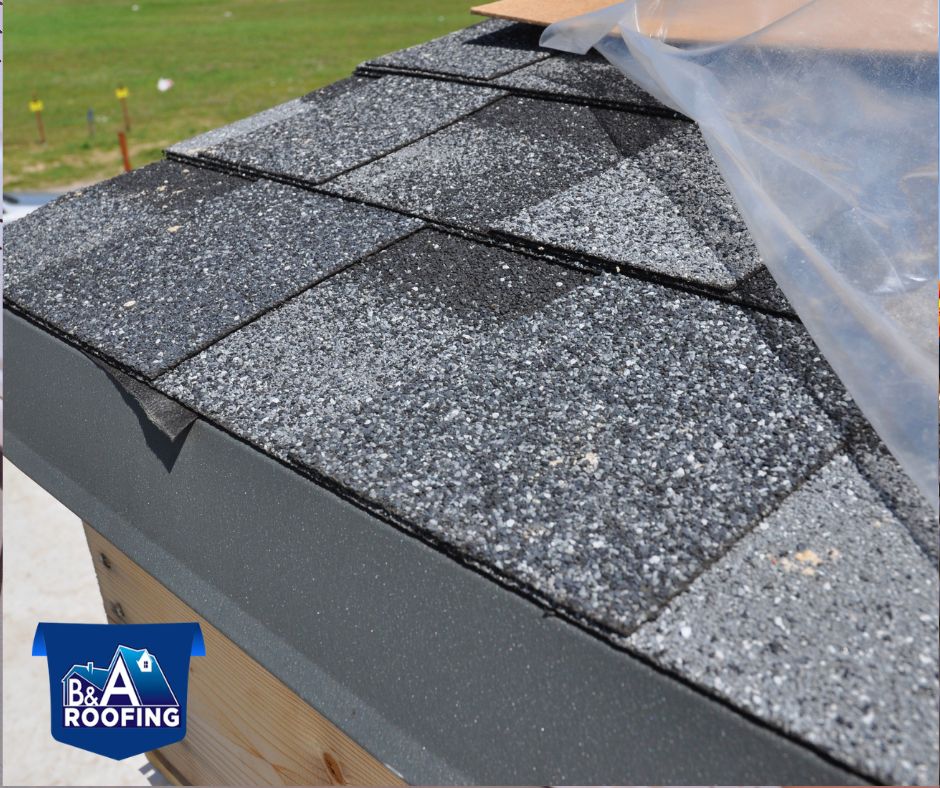
Asphalt shingles divide into three meaningful tiers: 3-tab (economy), dimensional/architectural (standard), and premium/impact-resistant (performance). 3-tab shingles are a single flat layer of asphalt-coated fiberglass mat with cutouts that create the appearance of three separate shingles per strip. They are the lightest, thinnest, and cheapest option — and they are largely being phased out of new installations because dimensional shingles have become so cost-competitive that the 3-tab value proposition has essentially collapsed. Dimensional or architectural shingles use a laminated two-layer construction that creates genuine depth and texture, a higher wind rating (typically 110 to 130 mph versus 60 to 80 mph for 3-tab), and meaningfully longer lifespan. This is the standard choice for most Southeast roof replacement projects today.
The premium tier — Class 4 impact-resistant shingles, luxury architectural products, and enhanced warranty systems — is where the most significant performance differentiation happens. Class 4 impact resistance (the highest UL 2218 rating) means the shingle has been tested to withstand a 2-inch steel ball dropped from 20 feet without cracking — which correlates to real-world performance in hail events that would damage standard shingles. In states like Alabama and Mississippi with active hail seasons, Class 4 shingles frequently qualify for homeowner’s insurance premium discounts that offset part of their higher upfront cost. For detailed Southeast pricing context across all three tiers, our guide on roof repair cost tupelo mississippi and regional replacement benchmarks walks through the per-square costs by shingle category.
The Three Grades: What You Get at Each Price Point
- Single-layer flat profile
- 60–80 mph wind rating
- Basic impact resistance only
- Limited color options
- Basic manufacturer warranty
- Largely phased out on new installs
- Not recommended for SE hail zones
- Laminated two-layer construction
- 110–130 mph wind rating
- Good impact resistance (Class 3 available)
- Wide color and texture range
- GAF System Plus / CertainTeed warranty eligible
- Standard choice for SE replacement
- Best volume-to-value in the market
- Heaviest weight; thickest mat
- 130+ mph wind rating
- Class 4 impact resistance (UL 2218)
- Luxury profiles; wide aesthetic range
- GAF Golden Pledge® eligible
- Insurance premium discount potential
- Best choice for repeat storm-damage areas
Honest Pros and Cons: Asphalt in the Southeast
- Lowest upfront cost per square of any roofing category
- Universal contractor availability — every certified roofer installs it correctly
- Wide aesthetic range — color, texture, and profile variety unmatched by other materials
- Insurance claim-friendly — adjusters price repairs and replacements easily
- Repair parts universally available — damaged sections can be matched and repaired years later
- Class 4 versions provide excellent hail protection in active hail markets
- Strong manufacturer warranties at the upper tiers (GAF Golden Pledge®)
- Compatible with most existing roof structures — no deck reinforcement required
- Easy to upgrade incrementally — Class 4 over standard at next replacement
- Shorter Southeast lifespan than national marketing suggests — plan for 18–25 years, not 30
- UV and heat accelerate aging in Gulf South conditions — black shingles reach 160°F+ in summer
- Algae and moss growth common in humid Alabama, Mississippi, Georgia climates
- Wind resistance lower than metal at standard grades — lifted shingles a recurring issue
- Granule loss from hail is functionally significant even when no visible penetration occurs
- Landfill burden — asphalt shingles are not biodegradable; old shingles contribute to waste
- Not the longest-term value — two shingle replacements over 40 years often cost more than one metal installation
- Lower resale signaling value than metal or slate to knowledgeable buyers
❓ FAQ: How long do asphalt shingles last?
The honest Southeast answer is 18 to 25 years for dimensional shingles and 12 to 18 years for 3-tab products, under normal conditions. The word “normal” is doing real work in that sentence — a poorly ventilated attic, missing drip edge, inadequate underlayment, or high nailing during installation can all cut those numbers meaningfully. Conversely, proper attic ventilation, annual maintenance, prompt repair of minor damage, and algae-resistant shingle formulations can push toward the upper end of the range.
The gap between manufacturer marketing benchmarks and Southeast real-world performance is primarily explained by four climate factors: UV index (the Southeast has among the highest year-round UV exposure in the continental US), thermal cycling (the swing between summer peak attic temps and winter lows stresses the asphalt binder repeatedly), humidity and biological growth (algae and moss colonize asphalt granules and accelerate surface degradation), and storm frequency (each hail or wind event adds cumulative loading to the shingle system). The national 25-to-30-year marketing benchmark is calibrated on mid-Atlantic or Midwest conditions. Planning for 20 years and budgeting accordingly is the more accurate framework for homeowners making roof replacement near me at Hattiesburg or similar Southeast decisions. According to U.S. Department of Energy guidance on energy-efficient roofing, reflective granule coatings and adequate attic ventilation are the two most impactful factors for extending shingle life in hot, sunny climates — both of which are directly within the contractor’s control at installation.
Lifespan Reality: Southeast vs. National Benchmarks
Southeast climate factors (UV index, heat, humidity, storm frequency) consistently compress shingle lifespan 25–35% below national benchmarks. Plan and budget accordingly — the number on the shingle bag is not a Southeast guarantee.
❓ FAQ: What causes asphalt shingles to fail prematurely?
Three categories of premature failure, in order of how frequently they occur. First: installation errors that are invisible at completion. High nailing — fasteners placed above the manufacturer’s nail strip — is the most consequential and common mistake. A shingle rated for 130 mph when correctly nailed may have an effective wind resistance of 60 to 70 mph when high-nailed. The shingles look identical from outside after installation either way. You find out the difference during the first severe thunderstorm. Inadequate attic ventilation is the second installation-phase failure driver: without proper intake and exhaust balance, attic temperatures cook the shingle mat from below, accelerating binder degradation regardless of what grade of shingle was installed.
Second category: deferred maintenance compounding into system failure. Clogged gutters overflowing against the fascia, blocked soffit vents reducing attic airflow, minor flashing failures allowing slow moisture infiltration, and algae colonization that is left untreated all add incremental stress to the shingle system that accumulates into premature failure. Third: material quality shortcuts taken at bidding. Skipping ice-and-water shield at vulnerable areas, using felt underlayment instead of synthetic on a Southeast home, substituting basic pipe boots instead of replacing them at installation, and sourcing off-brand granule coatings that UV-fade faster than branded products — these are the shortcuts that produce bids $800 cheaper and installations that underperform their expected life by 20 to 30%. When you are evaluating quotes for roof replacement near me at Huntsville or anywhere in our markets, the written scope that specifies every material and standard is the document that tells you whether that cheaper bid is actually cheaper over the life of the roof.
What Causes Premature Failure: The Six Key Factors
🔨 High Nailing
Fasteners placed above the manufacturer’s nail strip dramatically reduce wind resistance. The most common installation error, completely invisible after completion. Discovered during the first severe storm when shingles blow off a 2-year-old roof.
🌬️ Poor Attic Ventilation
Blocked or insufficient soffit intake creates an oven effect. Attic temps exceed 160°F on black shingles in Southeast summer, baking the asphalt binder from below and cutting 5–8 years off even premium shingles.
🧪 Substandard Underlayment
15-lb felt underlayment dries out and becomes brittle in Southeast heat within 5–7 years. Synthetic underlayment lasts 20+ years. The difference is $300–$600 on a full replacement and several years of useful roof life.
🌱 Algae & Biological Growth
Black streaking from Gloeocapsa magma algae is nearly universal on Southeast roofs. Untreated algae retains moisture against the granule surface and eventually loosens granule adhesion. Algae-resistant shingles (copper-infused granules) resist colonization for 10+ years.
⚡ Cumulative Storm Loading
Each hail event loosens granules and stresses the mat. Each wind event creates micro-fatigue at the nail line. Over a Southeast storm season, cumulative loading accelerates aging in ways that are invisible but measurable in shortened useful life.
📋 Skipped Accessories
No ice-and-water shield at valleys, reused pipe boots, improper starter strip, missing drip edge — each shortcut creates a specific future failure point. The scope document tells you what is included; if it is vague, ask line by line.
❓ FAQ: Do all asphalt shingles look the same?
Far from it — and aesthetic variety is one of asphalt’s genuine competitive strengths. The 3-tab product does have a fairly uniform, flat appearance that reads as dated on many architectural styles. But the dimensional and premium tiers offer a range of profiles, shadow patterns, and color blends that can convincingly replicate the look of cedar shake, slate, and even tile at a fraction of the cost. GAF’s Camelot II and Grand Sequoia lines, CertainTeed’s Presidential Shake, and Owens Corning’s Duration Storm are examples of premium asphalt products where the visual result is genuinely distinctive rather than generic.
Color selection matters more than most homeowners realize, and not just aesthetically. Dark colors absorb significantly more solar heat than light colors — a black or charcoal shingle runs 20 to 40°F hotter on the surface than a light tan or white shingle under identical summer sun. That thermal difference translates directly into attic temperature, which translates into shingle mat degradation rate and cooling energy costs. In Southeast climates, the energy case for lighter shingle colors is meaningful. Algae-resistant granule formulations are available in most color lines and should be considered standard for any Southeast installation given how quickly algae colonizes shingles in humid Gulf South conditions. When discussing color and profile options for a replacement, your contractor should walk you through both the aesthetic and thermal performance implications of your choices, not just hand you a color chart.
Asphalt Shingle Brand Comparison
| Brand & Product | Grade | Wind Rating | Impact Rating | Algae Resistance | Top Warranty Tier |
|---|---|---|---|---|---|
| GAF Timberline HDZ® | Dimensional | 130 mph | Class 3 | StainGuard Plus™ 25 yr | GAF Golden Pledge® (Master Elite® only) |
| GAF Armor Shield II | Class 4 Premium | 130 mph | Class 4 UL 2218 | StainGuard Plus™ | GAF Golden Pledge® available |
| CertainTeed Landmark Pro® | Dimensional | 130 mph | Class 4 available | StreakFighter® 25 yr | SureStart PLUS™ 15-yr workmanship |
| Owens Corning Duration® Storm | Class 4 Premium | 130 mph | Class 4 UL 2218 | StreakGuard™ | Preferred Contractor warranty |
| GAF Timberline CS® (Cool Series) | Dimensional — reflective | 130 mph | Class 3 | StainGuard Plus™ | GAF Golden Pledge® available |
| 3-Tab (any brand) | Economy | 60–80 mph | Basic only | Varies — often limited | Basic only — not recommended SE |
❓ FAQ: What is the best asphalt shingle brand?
The honest answer: the best shingle brand is the one your certified contractor can install to the specification that unlocks the strongest warranty, which is determined by their manufacturer certification, not by which brand logo is on the package. All three major manufacturers — GAF, CertainTeed, and Owens Corning — produce high-quality dimensional and Class 4 products at the upper tiers. The performance difference between a properly installed GAF Timberline HDZ® and a properly installed CertainTeed Landmark Pro® over the life of the roof is marginal. The performance difference between either of those products installed correctly and the same product installed with high nailing, skipped ice-and-water shield, and inadequate ventilation is enormous.
That said, GAF holds a meaningful practical advantage in one dimension: the GAF Master Elite® certification program is the most rigorous contractor certification in the shingle market, and it is the only pathway to the GAF Golden Pledge® warranty — which covers both material defects and workmanship (installation) for 50 years on the shingle and 25 years on the workmanship. No other residential shingle warranty matches that combined coverage period. B&A Roofing is GAF Master Elite® certified across all seven of our Southeast offices, which means every roof replacement we complete is eligible for Golden Pledge® coverage where the homeowner chooses it. Whether you are looking for a qualified roofing contractor athens al for a North Georgia project, a trusted clarke county roofing company in rural Mississippi, or expert guidance on which tier makes sense for commercial roof installation tupelo — b & a roofing brings the same certified standard to the selection conversation as to the installation itself.
Asphalt vs. Alternatives: Knowing When to Look Beyond Shingles
Asphalt shingles are the right choice for most Southeast residential replacements — but not for all of them. Three scenarios where looking beyond asphalt makes real financial sense. First: if you have filed two or more storm damage claims in the past ten years, the cumulative insurance impact and out-of-pocket costs of cycling through asphalt replacements may make a Class 4 impact-resistant shingle or a standing seam metal system the better long-term investment. Metal roofing holds its value against hail and wind at a fundamentally different level than even Class 4 shingles — our guide on the best paint for metal roof coatings explains what the 40-to-70-year metal lifespan actually requires in maintenance terms. Second: if you plan to stay in the home for 25 or more years, the total cost of one metal installation versus two asphalt replacements often converges or crosses in metal’s favor by year 20. Third: if you have a flat or low-slope section, asphalt shingles are simply not appropriate — that requires a membrane system such as TPO or modified bitumen, and understanding how a proper flat roof drainage system functions is the starting point for any low-slope commercial or residential application.
What B&A Roofing Specifies on Every Shingle Installation
- Synthetic underlayment — 25+ year lifespan versus 5–7 years for felt. Standard on every installation regardless of what the base bid comparison might suggest.
- Ice-and-water shield at all penetrations and valleys — eaves, around every chimney and skylight, in every valley. Not just where code minimum requires it.
- Correct drip edge sequencing — under underlayment at eaves, over underlayment at rakes. A detail that is consistently botched on low-bid installations and that accelerates fascia rot when wrong.
- Nail pattern documentation — fastener type, length, and placement in the manufacturer’s nail strip. Not just “nailed correctly.”
- All original pipe boots replaced — no exceptions. $15 material cost; $300–$500 callback cost if skipped.
- Ventilation confirmation before sign-off — intake and exhaust balanced and verified. Every bath fan confirmed through the deck, not terminating in the attic.
- Warranty registration completed — manufacturer warranty is not automatic; it requires registration by the installing contractor. B&A completes this on your behalf within 30 days of installation.
The one question that separates a quality shingle bid from a value-engineered one: “What underlayment are you specifying, and is ice-and-water shield included at all penetrations and valleys?” A contractor who specifies synthetic underlayment and ice-and-water shield at all vulnerable areas in writing is telling you how they build. One who uses “standard underlayment” vaguely in the bid description may be planning to use 15-lb felt. The difference is real and will show up in performance.
Ready to Choose the Right Shingle for Your Roof?
B&A Roofing walks you through every grade, brand, and warranty option with honest Southeast-adjusted lifespan guidance — so you choose what actually fits your home, your hold period, and your budget. Roof replacement near me at Birmingham, Hattiesburg, and Huntsville. GAF Master Elite® certified.
Get Your Free Replacement AssessmentFree inspections · Written scope · GAF Master Elite® certified · All shingle grades · MS · AL · GA