
Soffit & Fascia: Maintenance and Replacement
❓ FAQ: What are soffit and fascia and why are they important?
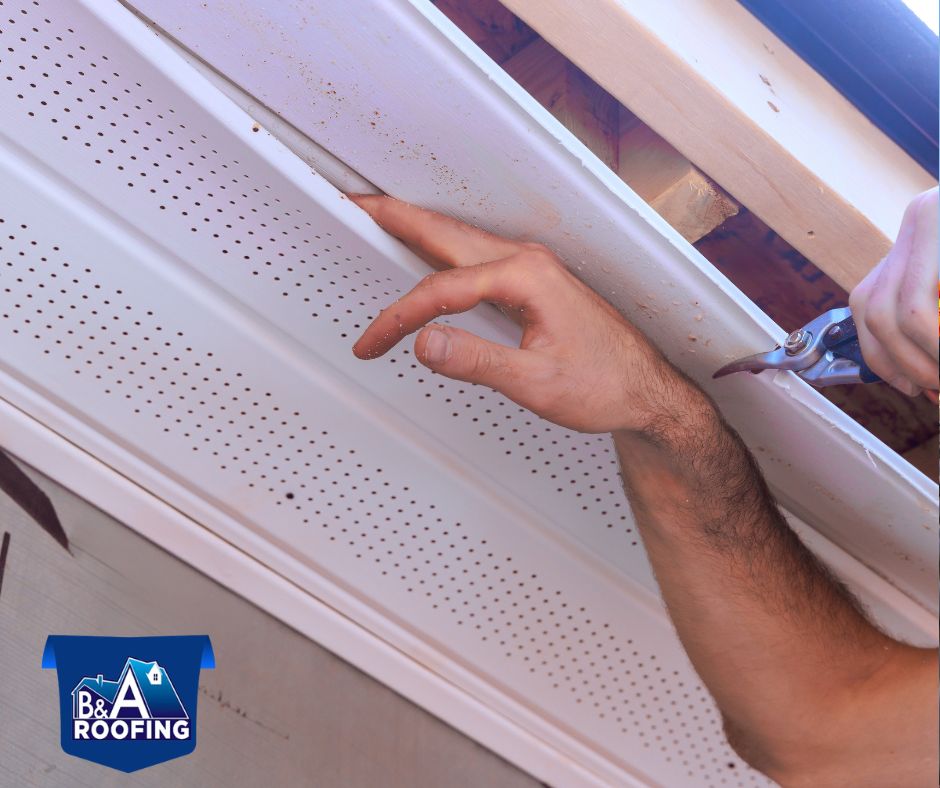
The fascia is the vertical board that runs along the lower edge of the roof, immediately behind the gutters. It closes off the end of the rafter tails, provides the attachment surface for the gutter system, and presents the finished face of the roof edge to the exterior. The soffit is the horizontal surface that fills the underside of the eave overhang — the ceiling of the overhang, visible when you stand at the wall and look up. Together they seal and finish the transition between the roof system and the exterior wall.
Their functional importance goes beyond aesthetics. The fascia supports the entire gutter system — a deteriorated fascia board cannot hold gutter spikes or hanger brackets securely, which is why gutters often pull away from a home before the gutters themselves have failed. The soffit serves two critical functions: it seals the rafter cavity from pest intrusion (birds, squirrels, and insects regularly enter through damaged or open soffit), and in a ventilated soffit system it provides the intake air that flows up through the attic and out through ridge or box vents. Without adequate soffit intake, the attic ventilation system cannot function correctly regardless of how many exhaust vents are installed. Inadequate attic ventilation is one of the primary causes of premature shingle aging across the Southeast — which means damaged soffit is not just an eave problem, it is a roof lifespan problem.
Understanding the Eave System: Fascia, Soffit, and Drip Edge Together
These three components work as a system. Drip edge that directs water into the gutter protects the fascia from constant moisture exposure. Intact fascia holds the gutter tight, which channels water away from the foundation. Intact ventilated soffit feeds the attic ventilation system that protects the roof deck and shingles above. When one element fails, it typically accelerates failure in the others — which is why fascia and soffit damage almost always presents as a package rather than a single isolated component.
What Causes Soffit and Fascia to Fail in the Southeast
❓ FAQ: What causes fascia and soffit to rot?
In the Southeast, the primary driver of fascia and soffit rot is chronic moisture exposure combined with the region’s high humidity, high temperatures, and long wet seasons. The fascia board is particularly vulnerable because it sits immediately behind the gutter — a position where clogged or overflowing gutters direct a sheet of water directly against its face for hours at a time. Even a properly installed fascia board will absorb that repeated moisture exposure over years, and once the paint film cracks or peels even slightly, the exposed wood draws water in through capillary action and rot begins.
Three additional factors accelerate the process in the Southeast specifically. First, missing or improperly installed drip edge: without drip edge, water running off the shingles contacts the fascia directly instead of dropping into the gutter. This is the single most common installation shortcut that leads to premature fascia failure. Second, inadequate gutter maintenance: gutters that overflow because they are clogged with pine needles, seed pods, or storm debris create a waterfall effect against the fascia rather than channeling water away from it. Third, soffit damage that allows moisture-laden attic air to exit through the eave: in a poorly ventilated attic, warm humid air finding a gap in the soffit condenses on the cooler fascia board from behind, creating rot from the interior surface where it is invisible until the board fails entirely.
💧 Gutter Overflow
Clogged or improperly pitched gutters overflow against the fascia face repeatedly. Even intermittent overflows create a wet-dry cycle that breaks down paint film and drives moisture into the wood grain over time.
❌ Missing Drip Edge
Without drip edge, shingle runoff wicks back under the shingle edge and contacts the fascia directly. A low-bid installation shortcut that adds years of direct moisture exposure to the fascia board from day one.
🍃 Debris Accumulation
Leaves and organic material packed against the fascia in gutter valleys hold persistent moisture directly against the wood surface. Southeast pine needles are particularly problematic — acidic and moisture-retaining.
🌬️ Attic Moisture Escape
Inadequate attic ventilation or a gap in the soffit allows warm, humid attic air to contact the cooler fascia board from behind. Condensation drives rot from the interior surface, invisible until the board collapses.
🐞 Pest Entry
Once rot softens the wood, carpenter ants and wood-boring beetles accelerate structural breakdown. In the Southeast, Formosan termites — active in all three of our states — can move from a compromised soffit into the rafter tail structure rapidly.
🎨 Paint Failure
The paint film is the primary moisture barrier for wood fascia and soffit. Once it cracks, peels, or blisters — from UV, thermal cycling, or improper adhesion — the wood beneath begins absorbing moisture in every rain event.
Material Options for Fascia and Soffit Replacement
❓ FAQ: What materials are best for replacing fascia and soffit?
For Southeast climates, the clear performance leader for both fascia and soffit replacement is aluminum-wrapped wood or cellular PVC (sometimes called PVC trim board). Cellular PVC will not rot, does not absorb moisture, holds paint far better than wood, and is dimensionally stable through the thermal cycling that causes wood to crack and split. It costs 20 to 40% more than wood at the material level but essentially eliminates the rot-driven replacement cycle that makes wood fascia a recurring maintenance expense in high-humidity climates. If you are replacing fascia on a home that has had rot twice in the past 20 years, installing cellular PVC or wrapping the replacement board in aluminum coil stock should be the default choice, not an upgrade discussion.
Aluminum soffit panels — the pre-manufactured vented or solid aluminum panels installed as a system — are the most durable soffit option for Southeast homes. They are impervious to moisture, hold their shape and finish through decades of thermal cycling, provide consistent ventilation through factory-perforated panels, and never need painting. Vinyl soffit panels are a cost-effective alternative with similar moisture resistance but somewhat lower impact resistance and a shorter finish life than aluminum. Engineered wood products (LP SmartSide and similar) offer improved rot resistance over raw lumber with a paintable surface, but still require coating maintenance and are not as fully moisture-immune as cellular PVC or aluminum systems. For historic homes or architectural profiles where wood appearance is required, see our guide on what makes a qualified roofing contractor athens al for historic-sensitive material guidance that applies equally to the Southeast.
| Material | Rot Resistance | SE Climate Lifespan | Maintenance Required | Relative Cost | Best For |
|---|---|---|---|---|---|
| Cellular PVC trim (fascia) | Excellent — immune | 40–50+ years | Paint touch-up only; no rot treatment | $$$ (20–40% over wood) | Long-term replacement; repeat-rot homes |
| Aluminum soffit system | Excellent — immune | 40–60+ years | Virtually none; rinse when dirty | $$$ | Most Southeast homes — standard best practice |
| Vinyl soffit panels | Excellent — immune | 25–40 years | Minimal; UV-yellowing eventual | $$ | Budget-conscious replacement; matches vinyl siding |
| Aluminum-wrapped wood fascia | Very Good | 25–40 years | Inspect wrapping seal; no painting | $$ (material + wrap labor) | Existing wood profiles where PVC unavailable |
| Engineered wood (LP SmartSide) | Good — improved vs. raw lumber | 20–30 years | Repaint every 8–10 years | $$ (similar to PVC) | Paintable profiles; historic replication |
| Raw lumber (pine or spruce) | Poor in SE humidity | 8–15 years | Repaint every 5–7 years; inspect for rot annually | $ (lowest upfront) | Temporary repairs only; not recommended for replacement |
Soffit and Fascia at Roof Replacement: Why the Timing Matters
A roof replacement is the most logical moment to address soffit and fascia issues for a straightforward reason: the drip edge is being removed and replaced as part of the roofing scope, which requires the gutter system to come down temporarily, which in turn provides unrestricted access to the full fascia board and soffit system. Adding fascia and soffit work to a replacement scope during this window costs significantly less in combined labor than doing it as a standalone project that requires its own mobilization, scaffolding, and gutter removal and reinstall.
More importantly, a new roof installed over deteriorated fascia starts with a compromised attachment surface for the drip edge and gutter system from day one. The drip edge is nailed into the fascia board. A soft or partially rotted fascia board does not hold drip edge nails securely, which allows the drip edge to shift over time and eventually allows water to bypass the gutter entirely. Whether you are planning a roof replacement near me at Birmingham, across the Hattiesburg corridor, or anywhere in North Alabama, the soffit and fascia assessment should be part of every replacement inspection — not a separate call later. Our guide on roof repair cost tupelo mississippi and Southeast replacement pricing includes context for soffit and fascia scope additions that helps you evaluate combined project costs realistically.
❓ FAQ: Can fascia and soffit be repaired instead of replaced?
Sometimes, but the bar for repair being the right answer is high in the Southeast because of how quickly rot spreads once it establishes. A section of fascia showing early surface softness with no structural failure can be treated with epoxy consolidant and filler, reprimed, and repainted — and that repair will hold for several years if the underlying moisture source (usually gutter overflow or missing drip edge) is addressed simultaneously. If the moisture source is not corrected, any repair to the wood itself is temporary regardless of how well the product is applied.
The practical rule: repair is appropriate when the affected section is less than 25% of the total fascia run, the damage is surface-level rather than structural, and you are simultaneously correcting the cause. Replacement is appropriate when the damage is structural (you can push a screwdriver into the wood without significant force), when multiple sections are affected, when you are doing a roof replacement that includes drip edge replacement anyway, or when the material is raw lumber that has rotted twice before. Replacing a 10-foot section of rotted pine fascia with another 10-foot section of pine fascia while leaving the gutter overflow problem unaddressed is a 6-year solution to a 25-year problem. Replacing it with cellular PVC while correcting the gutter capacity issue is a final answer.
- Damage is surface-level — paint failure, minor softness only
- Less than 25% of total fascia run affected
- Moisture source (gutter overflow, missing drip edge) will be corrected simultaneously
- Material is cellular PVC or aluminum that can be patched cleanly
- No pest infestation behind the affected section
- Budget constraints make full replacement impractical this season
- Screwdriver pushes into the wood with light pressure — structural failure
- 25%+ of the fascia run shows rot or softness
- A roof replacement is happening anyway — drip edge is coming off regardless
- This is the second or third rot episode on the same section
- Pest damage is present behind the affected board
- Material is raw lumber that has a pattern of recurring failure
Soffit Ventilation: The Hidden Driver of Roof Lifespan
❓ FAQ: How do I know if my soffit ventilation is adequate?
The general standard for residential attic ventilation is 1 square foot of Net Free Area (NFA) of ventilation for every 150 square feet of attic floor space — split equally between intake (soffit) and exhaust (ridge or box vents) for a balanced system. Most homes fall short of this standard, and the shortfall is almost always on the intake side rather than the exhaust side. A homeowner who has added ridge vents to improve attic performance without adequate soffit intake has actually made things worse — the ridge vent draws air from anywhere it can find it, including back through the other exhaust vents or through gaps in the ceiling plane, rather than drawing fresh outside air through the eave as designed. More exhaust without more intake creates negative attic pressure that can pull conditioned air out of the living space.
Signs of inadequate soffit ventilation are visible without any measurement: persistent attic heat even in moderate weather, frost on the underside of the roof deck in winter cold snaps, moisture staining on attic framing that is not traceable to a roof leak, and premature granule loss on shingles (accelerated by cooking from below in a poorly ventilated attic rather than surface UV alone). The most direct check is a physical inspection during daylight — standing in a darkened attic and looking toward the eaves. You should see a continuous band of light from the ventilated soffit around the entire perimeter. Blocked or solid soffit panels, insulation pushed to the eave edge, or a narrow overhang with no soffit at all are all conditions worth raising with your roofing contractor at inspection time. According to U.S. Department of Energy guidance on attic ventilation and radiant barriers, proper attic airflow significantly reduces cooling costs and extends the life of roofing materials in hot climates — making soffit maintenance a genuine energy performance issue, not just a cosmetic one.
The compounding nature of eave system failures is the key insight: each component failure creates conditions that accelerate the next one. Addressing the system as a whole at replacement time breaks the cycle.
Soffit and Fascia on Commercial and Specialty Properties
Commercial properties with flat roofs typically do not have traditional overhanging soffits, but they do have parapet wall coping, fascia trim at the roof edge, and in some cases enclosed eave details at the perimeter that perform equivalent sealing and drainage functions. The failure mode is different — instead of wood rot from gutter overflow, commercial fascia trim typically fails through sealant failure at the coping-to-wall junction, metal fatigue at coping seams, and rust propagation on older steel fascia systems. Our commercial roof installation tupelo team assesses eave and parapet conditions as part of every commercial inspection, because the same principle applies: a new membrane installed over a deteriorated parapet coping system starts compromised from day one.
For metal roofing, soffit and fascia condition is particularly relevant because the low maintenance profile of a standing seam or metal shingle system is only realized if the surrounding trim system is also durable. A cellular PVC or aluminum fascia alongside a metal roof is the combination that genuinely delivers the low-maintenance promise. Installing a 50-year metal roof system with raw pine fascia is a design inconsistency that will require a fascia replacement call within the first decade. Our resource on the best paint for metal roof systems is relevant here too — the same coating-quality thinking that extends metal panel life applies to the aluminum coil stock used to wrap fascia boards, where coating grade determines whether the wrap holds its finish for 15 years or 40.
For flat or low-slope sections with drainage systems, the soffit and fascia equivalent is the parapet and edge detail management. Our overview of how a properly functioning flat roof drainage system performs is directly relevant — edge details that are not properly maintained create water-retention conditions at the most vulnerable part of the membrane field.
What B&A Roofing Includes in Every Soffit & Fascia Assessment
- Physical probe of all accessible fascia runs — a screwdriver test, not just a visual. Soft spots that look painted-over are identified before they become structural failures.
- Drip edge condition check — whether it is present, properly installed (under underlayment at eaves, over at rakes), and creating the separation between water and fascia face that it is designed to provide.
- Soffit integrity and ventilation assessment — are panels secure, unblocked, and vented? Is the attic eave channel open or blocked by insulation? Is the NFA adequate for the attic square footage?
- Gutter attachment evaluation — are gutters pulling away from the fascia, indicating underlying rot? Are hangers holding or failing? Is the gutter pitched correctly for drainage?
- Pest evidence documentation — any sign of insect or animal activity in the soffit or behind the fascia is documented and referred appropriately.
- Written material recommendation — if replacement is recommended, the material recommendation (cellular PVC, aluminum system, LP SmartSide) is specified in writing with reasoning, not just a line item on a bid.
Whether you need a complete eave system overhaul as part of a roof replacement near me at Hattiesburg, a targeted fascia repair from a trusted clarke county roofing company, or expert guidance from b & a roofing on whether repair or replacement is the right call for your specific situation — the assessment always comes before the proposal.
A note on new roof over deteriorated fascia: A new roof replacement near me at Huntsville or anywhere else should never be installed over known rotted fascia without addressing it first. The drip edge is nailed into the fascia board. If that board is compromised, the drip edge attachment is compromised, which means the gutter system is compromised, which means the water management system designed to protect the new roof is compromised from day one. Ask your contractor explicitly: “What is the condition of my fascia, and if it needs replacement, is that included in this scope?”
The simplest maintenance habit that prevents most fascia rot: Clean your gutters twice a year — once in late fall after leaves have fallen, once in late spring after seed and pollen season. A gutter that flows freely never overflows against the fascia. That single habit, more than any material or coating choice, is what keeps fascia boards dry and rot-free through a Southeast home’s life.
Replacing Your Roof? Let’s Check Your Soffits and Fascia Too.
B&A Roofing includes a complete eave system assessment in every replacement inspection — fascia condition, soffit integrity, ventilation adequacy, and drip edge sequencing — with written findings and material recommendations before any work begins. Roof replacement near me at Birmingham, Hattiesburg, and Huntsville. GAF Master Elite® certified.
Schedule Your Free InspectionFree inspections · Full eave system assessment · Written scope before work · MS · AL · GA