
Storm Damage Roof Repair in Hattiesburg
Hattiesburg’s Storm History: Why This Market Is Different
Forrest County sits in a part of Mississippi that experiences severe weather at a frequency and intensity that places it in a genuinely higher-risk category than most American housing markets. The combination of Gulf moisture that travels north through the Pearl River corridor, cold fronts that push down from the Tennessee Valley through Central Mississippi, and the terrain of the Pine Belt that channels and concentrates wind energy creates a storm environment where significant weather events arrive multiple times per year in most active seasons.
❓ FAQ: What should I look for after a storm?
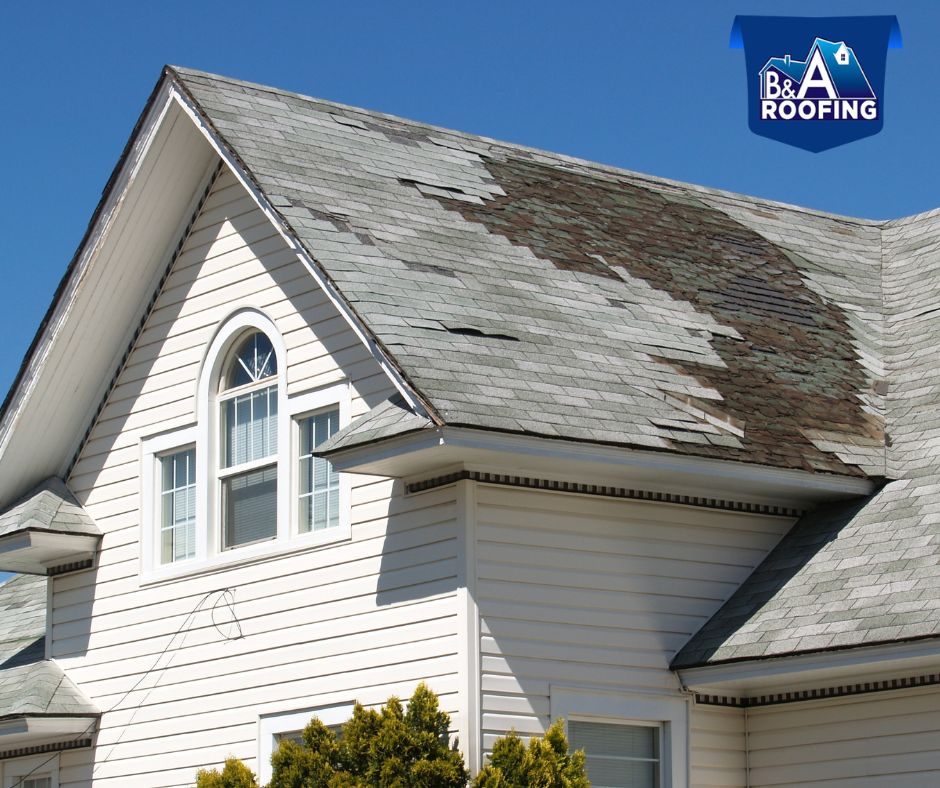
A thorough post-storm roof damage assessment Hattiesburg homeowners can perform safely involves a ground-level visual and an attic check — not roof walking, which adds injury risk and potential damage to a system that may already be structurally compromised. From the ground, use binoculars to systematically scan every roof slope looking for eight specific indicators. Missing shingles — sections of the field where the shingle is completely absent, exposing dark underlayment below. Lifted shingles — tabs that have been partially raised by wind, visible as a shadowed gap under the leading edge of the shingle. Hail impacts on soft metals: check the gutters, downspout elbows, and any exposed AC fins on rooftop equipment for circular dents that confirm hail size and density. Granule displacement: look at the downspout termination point for dense granule deposits after the first rainfall following a storm — significant granule loss accelerates surface aging.
Also check the ridge line for straight-running cracks or displacement where ridge cap sections have shifted. Look at chimney crowns and visible flashing for separation or debris impact. Check the soffit and fascia at the eave line for impact damage or detachment. Inside the attic, run a flashlight across the sheathing underside looking for active drips, staining, daylight through gaps, or wet insulation. The soft metal dent test is especially important in Hattiesburg’s hail market: a one-inch or larger dent in the gutter or AC fin from a round impact confirms a hail event of a size that typically causes reportable shingle damage, which means a claim investigation is warranted even if the shingle surface damage is not immediately visible from the ground. Our comprehensive roofing services across South Mississippi include free post-storm inspections that cover all of these assessment points with close-up documentation from the roof surface itself, not just a ground-level estimate.
Types of Storm Damage in the Pine Belt: What Each Looks Like Up Close
🫧 Hail Impact Damage
Hail impacts on asphalt shingles produce circular areas of granule displacement where the impact force literally knocks the protective granule coating off the asphalt mat below. Under magnification or close inspection, the impact site shows exposed black asphalt beneath a ring of displaced granules. On an aged shingle that has already lost elasticity, hail impacts may also crack the asphalt mat at the impact center, creating an immediate water infiltration point. Multiple hail events on the same shingle field are additive — a shingle that survived the first event with surface impacts may fail completely at the third. Soft metal surfaces (gutters, AC fins, step flashing) show the hail pattern most clearly and confirm both hail size and density for insurance documentation.
🌬️ Wind Damage and Missing Shingles
High-sustained wind during a Hattiesburg thunderstorm or tornado event lifts shingle tabs when the wind speed exceeds the shingle’s rated adhesion threshold. The sealing strip on the back of each shingle tab is designed to bond to the shingle below under solar heat activation — but that bond can be overwhelmed by wind speeds well below the shingle’s stated mph rating when the bond is aged, when installation fastening was inadequate, or when the shingle is cold during a winter wind event. Missing shingles expose the underlayment immediately below and the decking within one to two rain events. Partially lifted shingles create a wind-catch vulnerability that the next storm event will exploit further.
🌳 Tree and Branch Impact
The Pine Belt canopy that makes Hattiesburg’s residential neighborhoods beautiful creates a specific storm damage category that does not exist in the same way in open-terrain markets. A branch impact on a roof section can cause immediate decking penetration if the branch is large enough, but even smaller branch contact during high wind produces a different type of damage: localized abrasion of the shingle surface where the branch whipped repeatedly during the storm, concentrated moisture from the branch lying on the surface, and localized puncture risk from the branch end. Post-storm attic inspection is especially important after any event where branch contact occurred — the entry point is often not visible from the ground until water has already entered.
🌧️ Flashing Failures from Wind Loading
Step flashings at wall-to-roof transitions, counter flashings at chimney bases, and ridge cap sections are all vulnerable to the dynamic wind loading that severe Hattiesburg thunderstorms produce. The repetitive pressure cycling of high-sustained winds — pressure building and releasing many times per second — works mechanically bonded or sealant-adhered flashing components in ways that a single gust would not. A step flashing that appeared sound before the storm may be partially separated from its masonry chase after an extended wind event, allowing water infiltration at the next rain without any visible exterior evidence from the ground. Post-storm flashing inspection is the component most commonly missed by homeowners doing their own assessments and most commonly discovered by certified inspectors on close-up assessment.
🚫 Debris Field Impact Damage
Significant Forrest County wind events produce airborne debris that can cause shingle punctures, granule displacement, and localized cracking across large sections of the roof that the homeowner may not identify as storm damage because there is no obvious missing section. Debris field damage is one of the adjustment items most frequently missed on adjuster-only inspections and most frequently documented by experienced contractor-accompanied adjuster visits. Shingle sections that show irregular impact patterns inconsistent with normal weathering need to be included in the scope, and doing so requires a contractor with close-up surface documentation.
💧 Saturated Decking from Extended Rain
Extended rain events following a storm that displaced shingles or damaged flashings deliver sustained water infiltration that goes well beyond surface damage into the decking structure below. A roof section with missing shingles that sits open through a 48-hour rain event following the initial storm may have saturated the decking in the affected zone to the point where replacement is required regardless of what the shingle replacement scope would otherwise have been. Prompt emergency tarping after storm damage stops this compounding from occurring and is a covered mitigation measure under most homeowner policies.
❓ FAQ: What are the first steps after storm damage?
Six specific steps in the correct order, starting in the first hours after a storm passes. First: stay out of the structure if you have any concern about structural integrity from a tree impact, tornado proximity, or significant visible damage to the roof system. If there is any structural concern, let a certified inspector confirm it is safe before re-entering. Second: document everything. Photograph the exterior from all four sides, the interior of any rooms showing ceiling staining, the attic if safely accessible, and any soft metals showing hail dent patterns. Timestamp those photographs — the claim date and the storm date relationship matters in the documentation record.
Third: open your homeowner’s insurance claim immediately. Most policies require prompt notification of a covered loss, and delaying the claim opening compromises the storm-date documentation that ties the damage to the weather event. Opening the claim does not commit you to any specific contractor, repair scope, or settlement amount — it simply creates the record. Fourth: arrange emergency tarping if there is an active opening in the roof deck or missing shingles ahead of a forecasted rain event. B&A Roofing provides emergency tarping as part of our storm response service, and tarping costs are typically a covered mitigation expense under your policy. Fifth: call B&A Roofing to schedule a free certified storm damage inspection before the insurance adjuster visits — not after. A contractor who has already assessed and documented the damage is in a far stronger position to support an accurate claim during the adjuster visit than one called in after the adjuster has already set the scope. Sixth: do not sign any assignment of benefits until you have spoken with B&A Roofing and understand what an AOB involves — it is not a required document and can limit your options in ways that are not always obvious at the time of signing. According to NOAA’s National Weather Service documentation on the 2013 Hattiesburg tornado, that event produced an EF4 track through the city with peak winds estimated at 190 mph — a reminder that Forrest County’s storm history is not a future risk but a documented reality that every property in the metro has been exposed to for over a decade.
The Insurance Claim Process: What Actually Happens
Open Your Claim and Get a Claim Number
Call your insurer’s claims line. Report the date of the storm event, describe the visible damage in general terms, and confirm the claim is opened. You will receive a claim number and an adjuster assignment. Keep the claim number accessible — it is required for every subsequent interaction with your carrier.
Schedule Your B&A Inspection Before the Adjuster Visits
Request a free B&A Roofing inspection for the earliest available date. Our inspector documents every finding with close-up photographs, assesses both the roof surface and soft metals, and prepares a line-by-line scope. That documentation is ready before the adjuster arrives so that the conversation is between two documented findings rather than between your verbal description and the adjuster’s visual.
B&A Attends the Adjuster Inspection Alongside You
We do not send you into the adjuster meeting alone with a handshake and good wishes. Our inspector attends alongside you with our documented findings ready. Items in our scope that the adjuster misses become supplement requests with supporting evidence — photographs, measurements, and code requirement documentation. The gap between an adjuster’s initial estimate and the accurate scope on a complex Forrest County storm damage claim is frequently $3,000 to $8,000 or more.
Review the Initial Settlement and Understand the Depreciation Holdback
Most RCV policies issue an initial payment that is the total settlement minus a depreciation holdback. The holdback is released after the work is completed and the completion certificate or invoice is submitted. On a $14,000 claim with $3,500 of depreciation held back, you receive $10,500 initially and $3,500 after completion — less your deductible. Understanding this structure before work begins prevents the surprise of a partial payment that the homeowner interprets as the full settlement.
Work Is Completed and Depreciation Recovery Is Filed
After the project is complete, the completion documentation is submitted to your carrier to release the depreciation holdback. B&A Roofing handles this submission as part of our standard storm damage process — you do not have to navigate the post-completion filing on your own. The final check completes the settlement and closes the claim.
What Storm Damage Roof Repair Costs in Hattiesburg
For Hattiesburg homeowners with RCV coverage and a storm-eligible damage scope, the most impactful financial step is the certified inspection that documents the full scope accurately — it is the difference between a $1,500 deductible-only event and a $12,000 out-of-pocket partial claim. Our guide on new roof costs across Mississippi markets provides the replacement pricing benchmarks that help make sense of your settlement figures when they arrive.
❓ FAQ: Will I have to pay a deductible?
Yes — the deductible is your out-of-pocket contribution on every covered claim, and it is subtracted from your settlement regardless of how large or how well-documented the claim is. The more important question for Hattiesburg homeowners is which deductible applies. Most Mississippi homeowner policies now carry two separate deductibles: a standard all-perils deductible that applies to most claim types, and a separate wind and hail deductible that applies specifically to claims triggered by wind or hail events. The wind and hail deductible is often calculated as a percentage of the insured value of the home rather than a flat dollar amount — typically 1 to 2 percent — which means it can be considerably higher than the standard deductible even for homeowners who have never noticed the distinction on their policy.
On a home insured for $250,000 with a 2 percent wind and hail deductible, the storm damage deductible is $5,000 — not the $1,000 standard deductible the homeowner may have been thinking of. Knowing this number before a storm event rather than during a claim conversation is one of the most important financial preparedness steps available to any Forrest County homeowner. Pull out your policy declarations page and look for the wind and hail deductible line item specifically. Then look at whether your coverage is RCV (Replacement Cost Value) or ACV (Actual Cash Value) — an ACV policy on an aging Hattiesburg roof may pay only 30 to 50 percent of the replacement cost after depreciation, leaving the balance as the homeowner’s responsibility regardless of the documented damage scope. B&A Roofing’s Hattiesburg team walks through both of these policy details at every initial consultation so that the financial picture is clear before any commitment to a repair or replacement scope is made. For homeowners comparing material options once the insurance scope is confirmed, our guide on roof shingles brands covers the Class 4 impact-resistant product tiers that reduce the probability of a repeat claim from subsequent hail events. Our guide on the best paint for metal roof coatings covers the long-term metal alternative for homeowners who want to exit the recurring storm damage cycle permanently.
Identifying a Reliable Storm Damage Roofer vs. a Storm Chaser
❌ Storm Chaser Red Flags
- Arrives door to door within 24 to 48 hours of any major storm event
- Cannot provide a Mississippi contractor license number on request
- Requires an assignment of benefits before conducting any inspection
- Offers to waive your deductible as part of the pitch — this is insurance fraud
- Asks for a large cash deposit before materials are confirmed delivered
- Has no verifiable permanent Mississippi or adjacent-state office address
- Cannot provide references from completed Forrest County projects
- Pushes for a signed contract before the adjuster has visited the property
✅ What a Legitimate Storm Damage Roofer Looks Like
- Has a permanent office address verifiable before any work discussion
- Provides a Mississippi contractor license number without hesitation
- Never asks for an assignment of benefits as a condition of any service
- Attends the adjuster inspection alongside you with documented findings
- Provides a written scope with itemized line items before work begins
- Is in the market before the storm and handles warranty calls years later
- Never proposes deductible waiver — acknowledges it is illegal under MS law
- Has verifiable GAF or CertainTeed certification available on request
| Storm Damage Scenario | Coverage Likely? | Deductible Applies? | B&A Action | Urgency |
|---|---|---|---|---|
| Missing shingles after wind event | Yes — wind is a covered peril | Yes — wind and hail deductible | Inspect, tarp, document, attend adjuster | Same day |
| Hail damage, multiple slopes | Yes — if above size threshold | Yes — wind and hail deductible | Inspect, soft metal documentation, attend adjuster, supplement | Within 48 hrs |
| Tree branch impact with deck penetration | Yes — falling object is covered | Yes — standard deductible typically | Emergency tarp first, then full scope | Same day |
| Flashing separated by wind loading | Often — if wind is documented cause | Yes — wind and hail deductible | Inspect, document pre-storm vs. post-storm condition | Within 72 hrs |
| Normal shingle aging without storm trigger | No — wear is not a covered peril | N/A — no coverage | Honest repair vs. replace assessment, financing discussion | Schedule within 2 weeks |
| Ceiling stain after storm — source unclear | Possibly — source must be confirmed | Depends on confirmed cause | Full inspection including attic to confirm storm origin | Within 48 hrs |
B&A Roofing’s Approach to Storm Damage Roof Repair in Forrest County
- Free certified inspection before any adjuster visit — we document every finding close-up before the adjuster arrives, not after. Our scope is ready to compare against the adjuster’s line by line.
- Adjuster meeting attendance as a standard service — not an optional extra. We attend every adjuster inspection for storm damage claims and handle supplement requests for items missed on the initial estimate.
- Emergency tarping with documentation — tarping stops further damage and is submitted as a covered mitigation cost. Every tarp installation includes before and after photographs formatted for insurance submission.
- No assignment of benefits required — ever. You retain full claim control at every stage of the process.
- Depreciation recovery handled post-completion — we submit the completion documentation to release your depreciation holdback. You do not have to navigate the post-completion filing process on your own.
- Permanent local office — not a storm-season contractor — our Hattiesburg office at 5 Rivers Drive is staffed year-round. We handle warranty calls, post-season inspections, and non-emergency repairs as readily as we handle storm response.
Our full regional network covers every market where Forrest County homeowners may own properties or manage investments. Our commercial roof installation tupelo office in North Mississippi handles commercial storm damage work under identical standards. Our huntsville roof team in North Alabama, our fascia installation cullman al and Cullman County team, and our roofing contractor in birmingham office all operate under the same storm damage documentation and adjuster attendance standards. For commercial properties with flat or low-slope sections, our guide on how a properly designed flat roof drainage system functions is relevant context for storm-related ponding and drainage failure claims. When a storm damage replacement leads to a metal roofing conversation, our metal roofing coating guide covers long-term South Mississippi climate coating requirements that inform the true 40-year cost comparison.
The single most valuable pre-storm step any Hattiesburg homeowner can take today: Open your homeowner’s insurance policy declarations page and find three specific numbers: the standard all-perils deductible, the wind and hail deductible (which may be listed separately and calculated as a percentage of insured value), and whether your policy is RCV or ACV. Those three numbers define your actual financial exposure on the next storm event and should inform whether you maintain a savings or financing reserve sized to cover that exposure before storm season begins.
Storm Hit Your Home? We Respond to Hattiesburg.
Whether you need a storm damage roofer near me for an urgent call or a scheduled post-storm assessment, B&A Roofing provides free storm damage inspections across Hattiesburg and Forrest County. We document every finding, attend your adjuster visit, handle supplement requests, and complete the repair with the strongest available GAF warranty. No AOB required. No deductible waiver offered. No pressure.
Get Your Free Storm Damage InspectionFree inspections · Adjuster attendance included · Emergency tarping available · Forrest County and South MS · (601) 202-1608