
Signs Your Roof Is Reaching the End of Its Lifespan
Age Is the Starting Point — But Not the Whole Story
The first question any roofer asks when assessing an aging roof is: how old is it? Not because age alone determines condition, but because it sets the context for everything else you find. A 10-year-old roof showing granule loss is a different situation than a 22-year-old roof showing the same symptom. One is a warning sign worth monitoring; the other is confirmation that end of life is near.
According to the U.S. Census Bureau’s American Housing Survey, the median age of owner-occupied homes in the Southeast is increasing, which means an increasing proportion of the housing stock is carrying roofs that are at or approaching end of expected service life. If you bought your home more than 12 years ago and have no record of a roof replacement, there is a meaningful chance you are managing a roof in its final decade.
❓ FAQ: What are the top warning signs a roof needs replacing?
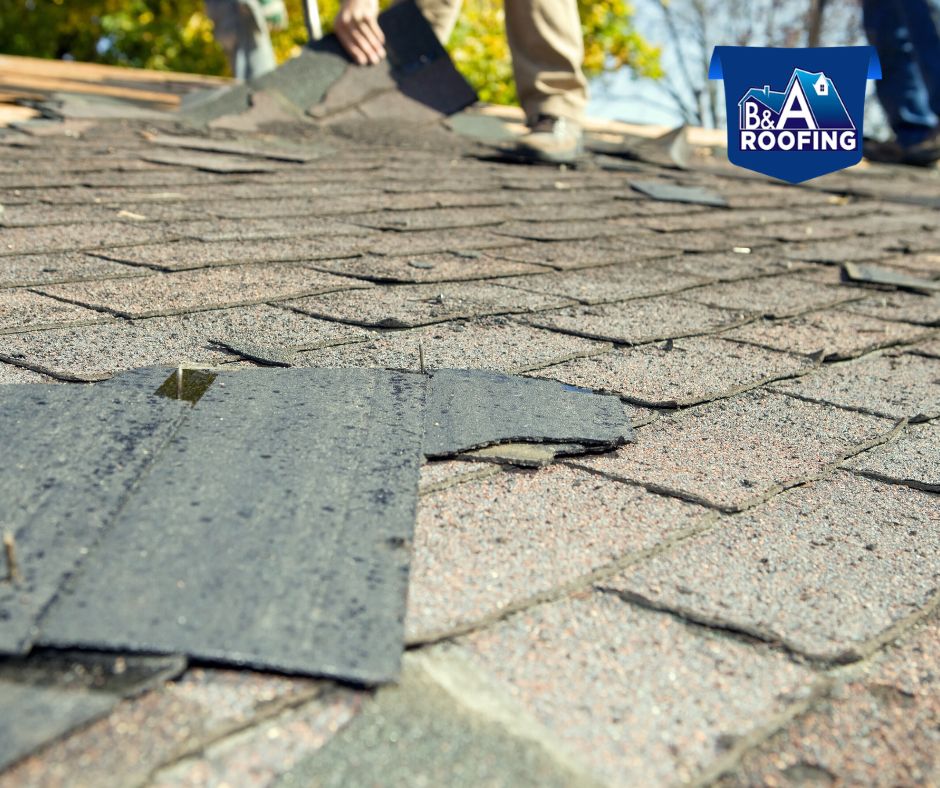
The most reliable aging roof warning signs fall into two categories: visible surface indicators and interior evidence. On the surface, the clearest signals are widespread granule loss (bare patches of asphalt visible on shingles), curling or cupping at shingle edges, cracked or missing shingles across multiple roof sections, and sheathing or decking that feels soft underfoot during a contractor inspection. In the attic, look for daylight visible through the roof deck, moisture staining or mold on rafters and insulation, and sagging in the decking between rafters.
The signs roof needs replacement rather than repair are typically about scale. A single missing shingle after a wind event is a repair. Widespread granule loss across three or four roof planes, combined with an age of 20+ years, is a replacement indicator. The difference matters for both the right decision and the insurance conversation — age-related decline is not a covered insurance event, so understanding which category you are in helps you plan the right financial response.
The 12 Warning Signs — Ranked by Urgency
❓ FAQ: How do I know if my roof has 5 years or 5 months left?
Honestly, this is exactly the question a professional inspection is designed to answer — and it is not one you can reliably answer yourself from the ground. The difference between “5 years left” and “5 months left” comes down to specific conditions that require a contractor to walk the surface: decking integrity, flashing conditions at every penetration, the granule retention level across different roof slopes, and whether there is any moisture already trapped in the decking or insulation below.
The roof replacement indicators that push a timeline from years to months are: active moisture in the decking (soft spots), visible daylight through the attic, interior water staining that appeared without a storm event, and shingles that are fragmenting rather than lifting. Any of those findings moves the timeline. A roof that is aging visibly but has none of those conditions may have considerably more time — which is why the inspection, and the written report that should accompany it, is the only accurate answer to that question. Don’t guess. Book the inspection.
The Cost Equation: When Repair Stops Making Sense
One of the most practical questions when dealing with an aging roof is not “is it bad enough to replace?” but “does the math still work for repairs?” There is a simple threshold that most roofing professionals use: if the cost of a repair exceeds 30% of the replacement cost, and the roof is past the midpoint of its expected life, replacement is the more economical long-term decision.
| Situation | Repair Cost | Roof Age | Recommendation | Reasoning |
|---|---|---|---|---|
| Single flashing failure, roof age 8 yrs | $600 | 8 years | Repair | Isolated issue, plenty of life remaining |
| Two leak points, roof age 14 yrs | $1,800 | 14 years | Repair + plan | Repair now, budget replacement in 5–7 yrs |
| Multiple flashing failures, roof age 19 yrs | $3,500 | 19 years | Assess carefully | Repair cost approaching 30% threshold on older system |
| Active leak + granule loss, roof age 21 yrs | $4,500 | 21 years | Replace | Repair cost high, system near end of life |
| Multiple leaks + decking soft spots, any age | $6,000+ | Any | Replace | Structural compromise changes the math entirely |
For a realistic picture of what replacement costs in your market, our guide on roof repair cost tupelo mississippi and across the Southeast breaks down the cost factors by material, home size, and regional labor market. That context helps you evaluate whether a repair estimate is reasonable and when replacement pricing makes more financial sense.
❓ FAQ: Can an aging roof cause higher energy bills?
Yes — and this is one of the end of roof lifespan signs that homeowners often attribute to other causes. As asphalt shingles age, they lose both their reflective granule surface and their dimensional stability. A shingle that has lost significant granule coverage absorbs more solar energy than a fresh shingle, which transfers as heat into the attic space below. Combined with any moisture infiltration that has degraded attic insulation — wet insulation can lose 40% or more of its R-value — the thermal performance of the entire roof assembly deteriorates.
The practical effect is that your HVAC system works harder in summer to offset the additional heat load from above. In the Southeast, where summer cooling costs already dominate the energy budget, this can be a measurable increase — sometimes 10 to 15% higher cooling costs compared to a home with a newer, properly insulated roof assembly. If you have ruled out HVAC issues and seen your summer bills climb over the past few years without a clear cause, add a roof and attic inspection to your troubleshooting list. Is my roof too old is a question worth asking before you replace an HVAC system that may be working fine against an underperforming envelope.
Material-Specific Lifespan: What Your Roof Type Should Tell You
Southeast ranges are shorter than national averages due to higher UV index, humidity, and storm frequency. Premium materials at the top end of ranges require professional installation and periodic maintenance.
For metal roofing specifically, the surface coating is what determines the upper end of the lifespan range. Our guide on the best paint for metal roof systems explains coating grades and recoating schedules — the difference between a 40-year metal roof and a 70-year one is largely maintenance. For flat or low-slope membrane systems, the flat roof drainage system is the most critical maintenance variable — ponding water shortens membrane life faster than any other single factor.
What to Look for From the Ground (No Ladder Required)
- Walk the perimeter and look up at the roof edge. Lifted or missing shingles at the eave, damaged drip edge, or sagging fascia are visible without climbing.
- Check the gutters. Heavy granule accumulation at downspout outlets is a clear indicator of advanced shingle wear.
- Look for uneven roofline. Any visible dip or wave in the ridgeline or roof plane suggests structural or decking issues.
- Check the ridge. Ridge cap shingles are often the first to fail — gaps, lifted sections, or missing pieces are visible from the ground on a single-story home.
- Look at the flashing lines. Around the chimney and at wall intersections, visible rust streaking or lifted metal indicates flashing failure.
- Go into the attic. Turn off the lights and look for daylight. Check for moisture staining on the decking above you. Feel for soft spots if accessible.
If any of these ground-level checks raise concerns, the next step is a professional inspection — not another ground-level look.
The age-and-condition test: If your roof is over 18 years old AND shows three or more of the signs in this guide, you are past the “should I replace?” question. The real question is when and which material. A free inspection from B&A Roofing gives you a written condition report, remaining life estimate, and replacement options with pricing — everything you need to make that decision with confidence.
Getting an Honest Assessment Across the Southeast
For homeowners across Mississippi, Alabama, and Georgia evaluating an aging roof, the most important step is a contractor assessment that gives you a written report — not just a verbal opinion and a sales pitch. Whether you are looking at a clarke county roofing company for a rural Mississippi property, need commercial roof installation tupelo options for an aging commercial building, or want to compare what a qualified roofing contractor athens al recommends versus what you are seeing on your North Georgia home, the standard should be the same: written findings, specific remaining life estimate, and options that range from repair to replacement with honest guidance on which makes more financial sense for your situation.
b & a roofing provides free inspections with written reports across all seven of our Southeast offices. No pressure to replace if the roof has usable life remaining — and honest guidance when it does not.
Think Your Roof Might Be Running Out of Time?
B&A Roofing offers free roof inspections with written condition reports across Mississippi, Alabama, and Georgia. We tell you what we find — including whether repair makes more sense than replacement. GAF Master Elite® certified. No pressure, no guessing.
Schedule Your Free InspectionFree inspections · Written reports · MS · AL · GA