
Roofing Permits and Inspections in Alabama, Mississippi, and Georgia
Everything homeowners, builders, and renovators need to know before installation day — so there are no surprises after the fact.
You’ve chosen your material, gotten your quotes, and you’re ready to commit. There’s one more piece of the puzzle that trips people up at the finish line: permits and inspections. It’s not the most exciting part of a roofing project, but skipping or mishandling it can create headaches down the road — with your insurance, your home sale, or your local building authority. Let’s get it right.
The good news is that for most homeowners, this is genuinely straightforward once you understand how it works. And if you’re working with a reputable contractor, a lot of it happens behind the scenes without you having to manage it yourself.
Do You Actually Need a Permit for a Roof?
Do I need a permit for a new roof installation?
For a full roof replacement — removing the old material and installing a new system — most jurisdictions in Alabama, Mississippi, and Georgia require a permit. For minor repairs involving a small number of shingles, many localities don’t require one, but the threshold varies. The safest approach is to assume a permit is needed for any full replacement or significant structural work, and have your contractor confirm with your local building department before work begins. The permit requirement exists to ensure the work meets current building code — which protects you, your neighbors, and your insurance coverage.
How Each State Generally Approaches Roofing Permits
Here’s a broad overview of the regulatory landscape across our service area — keep in mind that local county and city rules often add specifics on top of state-level requirements:
- Alabama adopted the International Building Code (IBC) and International Residential Code (IRC) as base standards
- Local jurisdictions (counties and municipalities) administer permits and may have additional requirements
- Full roof replacements typically require permits; minor repairs often don’t
- Alabama does not have a state-mandated contractor license for roofing specifically — local licensing and registration varies
- Always verify permit requirements with your specific county or city building department
- Mississippi uses the IBC and IRC framework, with local adoption and administration
- Roofing contractor registration is required at the state level for projects above certain dollar thresholds
- Permit requirements for roofing permit Mississippi projects are typically administered at the county or municipal level
- Some rural counties have minimal permit requirements; urban areas tend to be more regulated
- Confirm with your county building department — rules vary meaningfully across the state
- Georgia has a statewide minimum standard building code based on IRC/IBC
- Local authorities having jurisdiction (AHJ) may adopt more stringent local amendments
- Full roof replacements on residential structures typically require a permit
- Georgia requires roofing contractors to be licensed by the State Licensing Board for Residential and General Contractors
- Permit inspections are common for new construction; re-roofing inspections vary by jurisdiction
What Happens When You Skip a Permit
This is the part most homeowners don’t think about until it becomes a problem. Here’s what unpermitted roofing work can actually cost you:
| Situation | Consequence of Unpermitted Work | Severity |
|---|---|---|
| Selling your home | Buyer’s attorney or inspector flags unpermitted work; may require retroactive permit, re-inspection, or remediation | High |
| Filing a roof insurance claim later | Insurer may deny or reduce claim if roof was installed without proper permits | High |
| Building department discovery | Stop-work order, fines, and requirement to redo work to current code | Significant |
| Refinancing or HELOC | Lender appraisal may flag unpermitted improvements | Moderate |
| Warranty claims | Some manufacturer warranties require permitted installation | Moderate |
The permit fee itself is usually a few hundred dollars — a genuinely small line item against a $10,000-$20,000 roofing project. The risk of skipping it is almost never worth the savings. Understanding the full roof repair cost tupelo mississippi homeowners face — including permit fees — helps you build a complete budget with no surprise line items at the end.
The Permit and Inspection Process, Step by Step
Here’s how a typical permitted roofing project flows from application to final sign-off:
Permit Application Submitted
The contractor (or homeowner in some cases) submits an application to the local building department with project details — scope of work, materials, property address. Some jurisdictions accept online submissions; others require in-person.
Permit Issued (or Approved Pending Review)
Approval timelines vary: some jurisdictions issue same-day for standard residential roofing; others take 3-10 business days. New construction may require plan review before issuance.
Work Begins — Permit Posted on Site
The permit card is typically required to be visible at the job site during work. Installation proceeds according to approved scope and materials.
Inspection Requested
Once work reaches specified checkpoints (often after tear-off and decking inspection, then after final installation), the contractor requests an inspection from the building department.
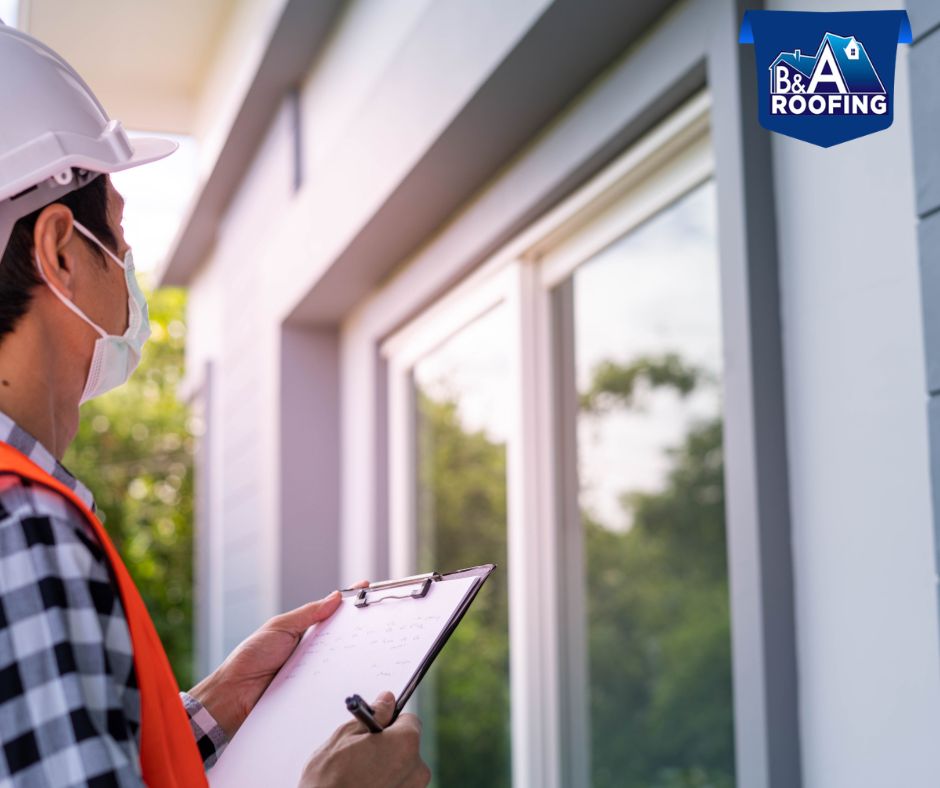
Inspector Visits and Reviews Work
A building inspector visits the site and verifies the work meets code requirements. If everything passes, the inspection is signed off. If not, specific corrections are noted and re-inspection is scheduled.
Permit Closed / Certificate of Completion
After final inspection approval, the permit is closed and a record is filed with the local building department. Keep a copy — it’s useful for insurance, home sales, and future reference.
What Does a Roof Inspection Actually Check?
What does a roofing inspection check for in new construction?
A roof inspection new construction Georgia, Alabama, or Mississippi project typically involves verifying several things: that decking is properly secured and in good condition before new material goes over it, that underlayment installation meets code, that flashing at all penetrations (chimneys, vents, skylights, valleys) is correctly installed, that ventilation meets minimum requirements for the roof area, and that shingle or panel installation follows manufacturer specifications (which is often tied to the warranty). For new construction, there may be a framing inspection before roofing begins as well, confirming that the structural components meet load and span requirements.
New Roof Inspection Checklist
Here’s what a thorough new roof inspection checklist typically covers — whether it’s a building inspector or your own final walkthrough with your contractor:
- Decking secured properly, no soft spots or rot before new material installed
- Underlayment installed per manufacturer specs and overlapped correctly
- Drip edge installed at eaves and rakes
- Flashing properly installed at all roof penetrations and wall intersections
- Ice and water shield in valleys and low-slope areas where required
- Shingles nailed at correct fastener count per manufacturer specs
- Ridge cap installed correctly and sealed
- Ventilation meets minimum net free area requirements for the attic
- Gutters re-attached or replaced properly after installation
- Site cleaned of debris and magnetic nail sweep completed
Where Most Inspection Failures Occur
Notice that flashing and ventilation account for the majority of correction notices — both of which are exactly the details that a quality roofer handles correctly the first time, avoiding a re-inspection delay on your project timeline.
Who’s Responsible for Pulling the Permit?
Who is responsible for pulling roofing permits, the builder or roofer?
In most residential scenarios, the who pulls roofing permit question comes down to who’s doing the work: the licensed contractor performing the installation is typically responsible for pulling the permit. In new construction, the general contractor often pulls an overall building permit that covers all trades, including roofing. In a standalone roof replacement, the roofing contractor should be pulling the permit as part of the project — it’s a service you’re paying for, and any reputable contractor will include it in their process. Homeowners can sometimes pull their own permits for work on their primary residence, but doing so on a project where a licensed contractor is doing the work creates a liability gray area that most attorneys would advise against.
Special Notes for Specific Roof Types
A couple of roof types that come up regularly in permit conversations:
- Flat or low-slope roofs — these often involve different code requirements around drainage design, membrane type, and slope. If you’re installing or replacing a flat section, make sure your contractor accounts for a properly designed flat roof drainage system in the scope — drainage requirements are commonly part of what inspectors verify on these roof types
- Metal roofing — installation methods for standing seam and exposed-fastener systems have specific manufacturer requirements that inspectors may reference. If you’re also looking at long-term maintenance, understanding your best paint for metal roof coating options down the road is part of planning a complete metal roof ownership experience
- Historic properties or HOA communities — additional approval layers may exist beyond the standard building permit, including HOA architectural approval or historic preservation review before permit-level work begins
What to Ask Your Contractor Before Work Begins
Before your roofer starts the job, these are the permit and inspection questions worth getting clear answers to:
- Are you pulling the permit, and is it included in your quote?
- Which inspections are required for this project in our jurisdiction?
- Will I receive a copy of the permit and final inspection sign-off?
- Are you licensed for roofing work in this state and county?
- What happens if the inspector requires a correction — who handles that and at what cost?
A contractor who answers these confidently and clearly is one worth trusting. One who hedges or dismisses them is a red flag worth taking seriously before you sign anything.
Working With a Team That Handles This Right
Whether you’re finalizing a project near a clarke county roofing company service area, comparing roofing companies hattiesburg ms builders trust with permitted work, coordinating larger projects like commercial roof installation tupelo developers rely on, or just trying to make sure your first roof replacement goes through properly, the difference between a contractor who handles permits professionally and one who doesn’t is significant — both in project quality and in your protection afterward.
If your project is over in Athens, an established roofing contractor athens al team familiar with local Georgia permit requirements makes the whole process smooth. For dependable roofing contractors in mississippi and across the region who handle permitting as a standard part of every project, our team at B&A Roofing pulls permits, manages inspections, and makes sure you have the paperwork to prove the job was done right — because that documentation protects you for years after installation day.
Reach us through b & a roofing to get a quote that includes the full picture — permit, installation, and inspection — with no surprises.
Ready to Finalize Your Roofing Project the Right Way?
B&A Roofing handles permits and inspections as part of every project — so you get a properly documented roof that’s fully covered and code-compliant.
Get My Free Roofing Quote Fast, free, and no obligation — serving Mississippi, Alabama & Georgia.Permits and inspections aren’t the exciting part of a roofing project, but they’re what separates a roof that’s just installed from one that’s properly documented, code-compliant, and fully protected. Getting this piece right is one of the best things you can do for yourself as a homeowner — and with the right contractor, you barely have to think about it.