


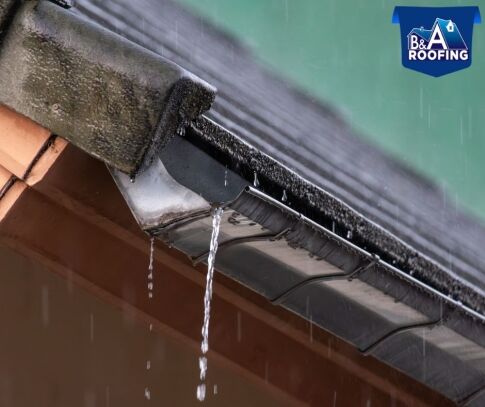
Gutter Overflow and Downspout Problems During Heavy Winter Rain in Decatur
Why Heavy Winter Rain Exposes Every Weak Spot in a Gutter System
Decatur sits on the Tennessee River in Morgan County, and winter and early spring are typically among the wettest stretches of the year in this part of North Alabama. Long soaking rains and the occasional downpour put a heavy, sustained load on a gutter system that may have coasted through the dry months without anyone noticing a problem. A partly clogged gutter that handles a summer shower can fail completely when the water keeps coming for hours.
The numbers behind that load are bigger than most people expect. One inch of rain falling on one square foot of roof produces about 0.62 gallons of water. Multiply that across the footprint of a typical home and a single wet day delivers hundreds or thousands of gallons that your gutters and downspouts have to move.
Roof footprint is the area the roof covers when viewed from above, not the sloped surface. A steeper pitch does not change the gallons, but it does speed up how fast the water arrives at the gutter.
❓ FAQ: Why are my gutters overflowing?
Most overflowing gutters come down to a short list of causes, and the first one on the list is by far the most common: clogs. Leaves, pine needles, seed pods, and the granules that wash off aging shingles collect in the channel and block the downspout opening. Water has nowhere to go, so it spills over the front lip. If you are going for a quick gutter overflow fix, clearing the channel and flushing the downspout with a hose solves the problem more often than anything else. The next causes are a gutter that has lost its slope because hangers have pulled loose, a system that is too small for the roof area feeding it, too few downspouts, and leaking seams that dump water before it reaches the downspout.
If you want the full tour of our roofing services, gutters and the roof edge are part of every inspection we do, because a roof and its drainage work together. A leaking roof edge and an overflowing gutter often show up as the same ceiling stain or the same rotted fascia board.
The Usual Suspects: Causes, Signs, Fixes, and Typical Costs
Not every overflow means the gutters need to be replaced. Here is what we usually find, how to spot it, and a typical price range for the fix in the Decatur area. Treat the prices as typical ranges rather than quotes, since they depend on your home’s height, the length of the gutter run, and the material.
| Cause | How to Spot It | Typical Fix | Typical Cost |
|---|---|---|---|
| Debris clog | Overflow starts at one spot, plants or granules visible in the channel | Clear the gutters and flush the downspouts | $100 to $250 for cleaning |
| Clogged downspout | Gutter is full but water barely drips from the bottom of the downspout | Clear the throat and elbow, flush with water | $75 to $200 |
| Sagging gutter or loose hangers | Gutter bows, water pools in the channel after rain stops | Re-hang and add hangers to restore slope | $100 to $350 per section |
| Leaking seams or end caps | Drips or stains at joints, white streaks on siding below | Reseal or replace the affected joint | $100 to $300 |
| Undersized gutters | Water overshoots the gutter in heavy rain even when it is clean | Upgrade to a larger profile and downspout | Part of a replacement |
| Too few downspouts | Long gutter runs overflow at the middle or far end | Add a downspout to shorten the run | $150 to $400 each |
| Damaged or rotted fascia behind the gutter | Soft wood, peeling paint, gutter pulling away from the board | Repair the fascia before re-hanging the gutter | Varies by length and wood damage |
That last row matters more than people realize. When overflow soaks the fascia board for months, the wood can rot, and screws or spikes lose their grip. Rehanging a gutter on rotten wood does not last. If your fascia needs attention, our fascia installation cullman al county page lists the roofline work we handle in North Alabama, and the same principles apply in Morgan County.
Downspouts: Count, Size, and Where the Water Goes
Gutters get most of the attention, but the downspouts decide whether the system works. Too few of them, too small, or discharging in the wrong place, and even a perfect gutter will overflow or send the water straight at your foundation. Most overflow problems on a clean, correctly sloped gutter trace back to the downspout side of the system. For a first downspout drainage Decatur checklist, look at three things: how many downspouts you have, how large they are, and where they empty.
❓ FAQ: How far should downspouts discharge?
The simple rule is to carry roof water well away from the foundation. University of Minnesota Extension guidance on drainage around the house says extensions should discharge at least 4 feet beyond the wall, ground near the foundation should slope away from the house, and a home should have a minimum of one downspout for every 50 linear feet of roof eave. Many drainage professionals suggest 5 feet as a practical minimum and 10 feet when you can manage it, especially where the soil drains slowly. Clay rich soil is common across much of the Tennessee Valley, and water that is dropped beside a foundation in clay can linger there.
Two details are worth adding. First, check the slope of the ground where the water lands. An extension that empties onto soil falling back toward the house is not doing its job. Second, avoid sending downspouts across the driveway or sidewalk where winter freezing can turn runoff into an icing hazard. Where a surface extension is in the way, a buried drain line with a pop up emitter or a daylight outlet farther out in the yard keeps the water moving without a tripping hazard.
| Discharge Option | Typical Reach | Best For | Watch Out For |
|---|---|---|---|
| Splash block | 1 to 2 feet | Bare minimum on well sloped ground | Usually too short on its own, water returns to the wall |
| Rigid or flip up extension | 4 to 6 feet | Most homes as a simple, low cost improvement | Must be pointed to ground that slopes away from the foundation |
| Buried drain line with pop up emitter | 8 to 15 feet or more | Clay soil, flat lots, or a lawn you want kept clear | Line must slope and the emitter must be kept free of debris |
| Drain to a daylight outlet or rain garden | Varies with the yard | Sloped lots with a place for water to leave safely | Do not direct water onto a neighbor’s property |
What Hail, Wind, and Ice Do to Gutters in the Tennessee Valley
Decatur’s weather adds its own twist to gutter problems. Hail dents and cracks gutters and downspouts, and a dented section can hold water instead of shedding it. Strong thunderstorm winds loosen hangers and pull gutters away from the fascia. And when a winter freezing rain event coats the roof edge, the weight of ice can pull a gutter out of line or snap a hanger, which sets up an overflow problem for the next heavy rain. A damaged system that looks fine in dry weather can fail the first time a wet winter storm arrives.
⛈️ Hail Dents and Cracks
Dented gutters hold water and debris and can crack at seams. Hail that dings gutters often bruises shingles too, so a gutter inspection is a good time to look at the roof. If the roof was damaged in a storm, insurance may apply.
🌬️ Wind Loosened Hangers
Gusts flex gutters and gradually work hangers loose. A slightly sagging gutter after a windy spring often turns into a standing water problem by winter.
❄️ Ice Load and Frozen Downspouts
Freezing rain adds weight to gutters and can freeze water inside downspouts, causing a backup the next time rain arrives. Gutters that are already loose are the first to give way.
🍂 Shingle Granules in the Channel
Heavy granule loss from an aging roof washes into gutters and silts up the channel. If you see a lot of it, the roof itself may be near the end of its life. Our guide to roof shingles brands explains what to look for in a replacement.
Repair or Replace? How to Decide
❓ FAQ: Should I repair or replace gutters?
If the gutters are in generally sound condition and the problem is a clog, a few loose hangers, or one leaking seam, repair is almost always the better value. A cleaning and re-hang can cost a few hundred dollars and fix an overflow completely. Replacement starts to make more sense when problems are widespread: seams leaking in many places, sections rusted through or cracked, gutters that sag no matter how often they are re-hung, wood behind them that is rotted, or a system that was never large enough for the roof. At that point, you are paying repeatedly to patch something that will keep failing.
Replacement is also a natural pairing with a new roof. When the roof is being replaced, the gutters come off anyway, and it is the most cost effective time to move to a better system. If you are weighing both, our guide on new roof costs gives you regional benchmarks for the roof side of the budget, and homeowners with metal roofing can read our guide on the best paint for metal roof finishes. Metal roofs shed water quickly, so gutter capacity matters even more.
| Your Situation | Usually Best Choice | Why |
|---|---|---|
| Clogged but otherwise sound gutters | Clean and flush | The channel is the problem, not the system |
| A few loose hangers or one leaking joint | Repair | Targeted fix restores slope or seals the joint |
| Widespread leaks, rust, or cracks | Replace | Repeated patching costs more over time than a new system |
| Gutters too small for the roof area | Replace with larger profile | No repair can add capacity the system never had |
| Rotted fascia behind the gutters | Repair wood first, then rehang or replace | New gutters will not hold on soft wood |
| Roof replacement planned soon | Replace together | Avoids paying for removal and installation twice |
Seamless Gutters in Decatur: Are They Worth It?
When homeowners start pricing a replacement, seamless gutters Decatur contractors offer are usually the headline option. Seamless gutters are formed from a continuous length of metal, so there are no joints along the run except at corners and downspout connections. Fewer joints means fewer places to leak. They generally cost a bit more up front than sectional systems, but for most homes the fewer leak points and cleaner look make them a popular upgrade. If you are shopping for gutter replacement Decatur homeowners compare, ask about the size of the gutter, the gauge of the metal, the number and size of downspouts, the type of hangers, and how the system will be attached to the fascia.
For a typical home with 150 to 200 feet of gutter, those ranges work out to roughly $1,000 to $3,500 for many seamless aluminum installations, before extras like extra downspouts or fascia repair.
How B&A Roofing Approaches Gutter and Downspout Problems in Decatur
- We look at the whole roofline. A gutter that overflows may be reacting to a roof problem, a fascia problem, or a downspout problem. We inspect all of it so the fix addresses the real cause.
- We check the roof edge and fascia. Wood damage behind the gutter is documented with photos so you can see exactly what needs attention first.
- Honest repair versus replace advice. If a cleaning and re-hang will solve your problem, we tell you that. If the system is past saving, we tell you that too and explain why.
- Storm damage guidance. If hail or wind damaged your gutters and roof, we document the damage and explain how an insurance claim works. We never propose deductible waivers, which are illegal under Alabama law.
- Commercial and flat roof drainage. For flat sections that drain to scuppers and interior drains instead of gutters, our guide on a properly designed flat roof drainage system explains why ponding causes repeat leaks.
We serve the Tennessee Valley through our regional offices, including our huntsville roof team in Madison County, our roofing contractor in birmingham office in Jefferson County, and our commercial roof installation tupelo team in North Mississippi.
A quick storm day check you can do safely: During the next heavy rain, stand under cover and watch where water leaves the roof edge. Note any spot where water spills over the front of the gutter, drips from a seam, or pours out of the bottom of a downspout right at the wall. Take a photo or short video. That evidence makes it much easier for an inspector to find the cause. Stay off ladders and wet roofs. If a storm leaves damage, the National Weather Service Huntsville office keeps a record of local severe weather reports at weather.gov/hun, which can help document the date of a storm event for an insurance claim.
Stop the Overflow Before the Next Heavy Winter Rain.
B&A Roofing offers free roofline and drainage inspections across Decatur and Morgan County. We find the real cause of the overflow, explain it in plain language, and give you a written recommendation with no pressure. GAF Master Elite® certified.
Schedule Your Free Drainage InspectionFree inspections · Written recommendations · Decatur and Morgan County · Cullman (256) 692-5527 · Huntsville (256) 886-7940