


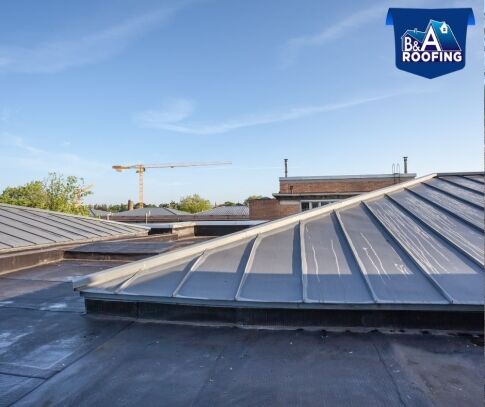
Cool Roof Technology and Benefits
What Makes a Roof “Cool”: The Two Core Metrics
The term “cool roof” describes any roofing system that measurably reduces the amount of solar energy absorbed and retained by the roof surface compared to a conventional roof. Two specific performance metrics define the technology, and understanding them is essential for evaluating any product claim you encounter from a manufacturer or contractor.
Solar reflectance measures what fraction of incoming solar radiation a surface reflects rather than absorbs. A perfectly reflective surface has a reflectance of 1.0 (100%). A perfectly absorptive surface has a reflectance of 0. Standard dark asphalt shingles typically have solar reflectance values between 0.04 and 0.12 — meaning they absorb 88 to 96 percent of the solar energy that strikes them. Cool roof shingles achieve solar reflectance values of 0.25 to 0.40 or higher. White TPO membranes and reflective coatings can reach 0.70 to 0.85.
Thermal emittance measures how efficiently a surface releases the heat it has absorbed through infrared radiation. A surface with high emittance sheds absorbed heat quickly. A surface with low emittance retains it. Most roofing materials have naturally high emittance (0.80 to 0.90), so solar reflectance is the more important variable in most cool roof evaluations. The combination of both metrics produces the Solar Reflectance Index (SRI), which the Cool Roof Rating Council and building codes use as the standard cool roof performance measure.
Surface Temperature: What Your Roof Actually Reaches on a July Afternoon
❓ FAQ: What is a cool roof?
A cool roof is any roofing system specifically designed to reflect more sunlight and absorb less heat than a conventional roof. The “cool” designation refers to measurable performance against standardized metrics — Solar Reflectance Index (SRI) and solar reflectance — rather than a loosely applied marketing term. Cool roofs can be achieved through reflective shingles with specially formulated granule coatings, white or light-colored membrane systems on flat and low-slope buildings, reflective roof coatings applied over existing roofing, or metal roofing with reflective paint finishes.
In the Southeast’s climate context, the practical case for cool roofing is stronger than anywhere else in the country. The combination of extreme UV index, high summer temperatures, and long cooling seasons means the energy savings argument compounds faster than in moderate climates. A homeowner in Birmingham or Hattiesburg running their air conditioning from April through October gets more annual benefit from a cool roof than a homeowner in Chicago who runs cooling for three months. The U.S. Department of Energy’s guidance on cool roofs documents that cool roofing systems reduce peak cooling energy demand by 10 to 15 percent in hot climates and reduce peak roof surface temperatures by 50 to 60°F compared to conventional dark roofing — numbers that translate directly to lower utility bills and extended roofing system lifespan for Southeast homeowners.
How Cool Roof Technology Works: The Three Mechanisms
Solar Reflectance
Specially formulated granules or pigments reflect solar radiation rather than absorbing it. Near-infrared wavelengths — invisible to the eye but responsible for most solar heat gain — are specifically targeted by advanced cool-roof granule chemistry, allowing darker colors to still achieve meaningful reflectance.
Thermal Emittance
Heat that is absorbed by the surface is released back to the atmosphere through infrared radiation rather than being conducted into the roof structure below. High-emittance surfaces cool down rapidly once the sun moves, reducing overnight heat retention that affects next-morning attic temperatures.
Ventilation Interaction
Cool roofing works best when paired with proper attic ventilation. A balanced intake-to-exhaust ventilation system removes heat that does reach the attic before it can transfer into living spaces. Cool roof plus ventilation is more effective than either alone and compounds the energy savings of both strategies.
❓ FAQ: Are cool roofs only for hot climates?
Cool roofs deliver the greatest benefits in hot, sunny climates with long cooling seasons — which is precisely the Southeast profile. The DOE and EPA have both noted a theoretical “winter penalty” for cool roofs in northern climates, where a reflective roof that reduces summer heat gain also reduces beneficial winter solar heat gain. In heating-dominated climates, this tradeoff can partially offset summer energy savings. In the Gulf South, this tradeoff is minimal to nonexistent because heating seasons are short and cooling seasons are very long. Mississippi, Alabama, and Georgia homeowners typically run air conditioning seven to eight months per year and heating for three months or fewer.
For a home in Huntsville, Hattiesburg, or the North Georgia markets where our team handles commercial roofing roswell ga work, the climate math consistently favors cool roofing. The energy savings during the long cooling season substantially outweigh any minimal additional heating cost during the short winter. The question for Southeast homeowners is not “is my climate hot enough for a cool roof to work?” — the answer is definitively yes. The question is which cool roof product fits the building type, budget, and whether a full replacement or a retrofit approach makes more financial sense at this stage of the existing roof’s life.
Cool Roof by Material: Performance and Southeast Applicability
| Material Type | Solar Reflectance | SRI Score | ENERGY STAR Eligible | Best Application | Relative Cost |
|---|---|---|---|---|---|
| White TPO Membrane | 0.70 to 0.85 | 104 to 120 | Yes | Flat and low-slope commercial | $$ |
| Reflective Elastomeric Coating | 0.65 to 0.80 | 90 to 110 | Yes | Retrofit over existing flat roofs | $ |
| Metal with Kynar Cool Finish | 0.50 to 0.70 | 70 to 100 | Yes | Steep and low-slope residential and commercial | $$$ |
| GAF Timberline CS Cool Series | 0.25 to 0.35 | 29 to 44 | Yes (selected colors) | Steep-slope residential shingle replacement | $$ |
| CertainTeed Landmark Solaris | 0.25 to 0.40 | 29 to 51 | Yes | Steep-slope residential — reflective granule tech | $$ |
| Standard Dark Asphalt Shingle | 0.04 to 0.12 | 0 to 6 | No | Baseline comparison — not a cool roof | $ |
| EPDM Black Membrane | 0.05 to 0.10 | 0 to 3 | No | Flat roof — thermal performance opposite of cool roof | $$ |
Energy Savings: What the Numbers Look Like in the Southeast
On a 2,000 sq ft Southeast home spending $2,400 per year on cooling, a 10% reduction saves $240 annually. Over 25 years at modest energy cost inflation, total savings can exceed $8,000 — a meaningful offset against the cost of a cool roof upgrade. For realistic project cost context, our guide on new roof costs in Mississippi and adjacent Southeast markets provides the installation investment benchmark to run the complete financial comparison.
❓ FAQ: Can I make my existing dark roof into a cool roof?
Yes — and the approach depends on what roofing system you currently have. For flat and low-slope roofs, a reflective elastomeric or silicone coating applied over the existing membrane is the most cost-effective retrofit path when the existing membrane is structurally sound and not at end of life. These coatings achieve solar reflectance values of 0.65 to 0.80 — dramatically better than the 0.05 to 0.10 typical of an uncoated black EPDM membrane — and cost a fraction of a full membrane replacement. The catch is that coatings require a sound, well-adhered substrate. An aging membrane with failed seams or saturated insulation is not a coating candidate — it needs replacement first. For a detailed look at how flat roof drainage design interacts with coating performance and membrane longevity, our guide on the flat roof drainage system is directly relevant to any retrofit planning conversation.
For steep-slope asphalt shingle roofs, a full retrofit to cool technology requires replacement because the reflective performance is built into the granule layer during manufacture — it cannot be painted or coated onto existing standard shingles with meaningful results. The good news is that at the point of replacement, cool series shingles typically cost only 5 to 15 percent more than standard shingles from the same manufacturer line, making the upgrade cost modest relative to the full project. For North Alabama properties, our team handling huntsville roof replacements regularly includes cool-series shingle options in the initial estimate so homeowners can make an informed comparison between standard and reflective product tiers before committing to a scope.
Retrofit Cool Roof Options by Roof Type
- Best for membranes with 5 or more years of remaining life
- Eliminates up to 90% of UV exposure to substrate
- Can qualify for ENERGY STAR and LEED credits
- Extends underlying membrane life by 5 to 15 years
- GAF Timberline CS and CertainTeed Solaris lines available
- Available in most standard color ranges
- ENERGY STAR certified on selected colors
- 5 to 15°F surface temp reduction vs. standard same-color shingle
- 40 to 70 year lifespan with proper coating maintenance
- Available in standing seam and metal shingle profiles
- Combines energy performance with superior storm resistance
- Best total-cost-of-ownership in cool roof category
- Best cool-roof performance per dollar on flat roofs
- Meets most building code cool-roof mandates for commercial
- Pairs with proper fascia installation cullman al perimeter detailing
- Weldable seams — no adhesive joint failure over time
❓ FAQ: What is the urban heat island effect and how do cool roofs help?
The urban heat island (UHI) effect is a well-documented phenomenon where developed urban and suburban areas are measurably warmer than surrounding rural land, primarily because of the concentration of heat-absorbing surfaces — dark roofs, asphalt pavement, and dense building clusters — that replace natural vegetation. The EPA and major research universities have documented UHI effects of 2 to 7°F average temperature increases in urban areas compared to their rural surroundings, with peak differences of up to 22°F in some cities during summer nights when retained heat radiates from surfaces that absorbed it during the day.
Cool roofs directly reduce UHI contribution by reflecting solar energy rather than absorbing and re-radiating it. When adopted at scale across a neighborhood or commercial district, the effect is meaningful and measurable at the community level — not just at the individual building level. A recent Lawrence Berkeley National Laboratory study found that if cool roofing were adopted across all applicable rooftops in the ten largest U.S. cities, the resulting temperature reduction could offset several decades of urban warming from climate change in those areas. For Southeast markets like the Birmingham urban corridor and the Hattiesburg metro area, where roof repair near me at Birmingham and roof repair near me at Hattiesburg calls increasingly include cool-roof upgrade questions, B&A Roofing treats the UHI conversation as part of the material selection discussion rather than a separate sustainability aside.
Urban Heat Island: Surface Temperature Contribution by Surface Type
Surface temperature contribution above ambient air temperature on a clear summer afternoon. Values represent typical measurements, not absolute figures, which vary by location and conditions. Source: EPA Heat Island Effect research data.
❓ FAQ: Does a cool roof qualify for LEED certification points?
Yes — cool roofing is one of the most accessible LEED certification credit pathways available through the Sustainable Sites (SS) category, specifically under Heat Island Reduction credits. LEED v4 and LEED v4.1 both award points for roofing systems that meet Solar Reflectance Index thresholds: an SRI of 82 or greater for low-slope roofs (up to 2:12 pitch) and an SRI of 39 or greater for steep-slope roofs (above 2:12 pitch). White TPO membranes and reflective metal coatings easily clear the low-slope threshold. Cool series shingles in lighter color formulations typically meet or approach the steep-slope threshold.
For commercial properties pursuing LEED certification in our Southeast markets — including commercial work handled by our commercial roof installation tupelo team in North Mississippi — cool roofing is typically one of several achievable credits that can be combined with other sustainable site and energy efficiency credits to reach the target certification level. The credit value is one or two points depending on the LEED rating system and version, which is meaningful in a certification score where every point counts toward the next tier. For commercial properties not pursuing formal LEED certification but seeking ENERGY STAR building certification, cool roofing contributes to the energy performance score that ENERGY STAR building ratings are based on. Our full range of roofing services across Alabama, Mississippi, and Georgia includes commercial cool-roof specification support for properties targeting any of these certifications. The product selection choices that deliver LEED or ENERGY STAR eligibility are the same products we recommend on performance grounds alone in the Southeast climate — the certification value is an additional benefit of specifications that already make financial sense.
LEED Credit Opportunities: Roofing’s Role in Green Building Certification
How B&A Roofing Approaches Cool Roof Specification
Every B&A Roofing project quote for a full replacement in the Southeast now includes a cool-roof upgrade option alongside the standard specification. Our position is that the energy savings data for Gulf South properties is compelling enough that homeowners and property managers deserve to see the real numbers — the cost premium and the projected savings — before choosing between standard and reflective products, not after the standard product is already installed.
- For residential steep-slope replacements: We include cool series shingle options from GAF and CertainTeed alongside standard lines so you can make a direct cost and performance comparison within the same manufacturer warranty framework.
- For flat commercial roofs: White TPO is our recommended default specification for any new membrane installation in the Southeast. The energy performance advantage over black EPDM is significant and the installed cost is comparable. Our roof shingles brands guide and our commercial material guides both address the comparison in detail.
- For existing roofs not yet at end of life: We evaluate reflective coating candidacy during any inspection visit. A sound flat roof membrane with five or more years of remaining life may be a strong coating candidate that delivers cool-roof performance without the cost or disruption of a full replacement.
Whether you are evaluating a scheduled replacement or a roof repair near me at Huntsville call that has identified a roof approaching end of life, the cool-roof conversation belongs in the initial assessment — not as an afterthought once materials are already selected.
The single most useful question to ask at your next roofing estimate: “What is the solar reflectance and SRI rating of the shingle or membrane you are specifying, and is there an ENERGY STAR-rated option in the same price range?” A contractor who can answer that question with specific numbers — not vague references to “light colors” or “reflective materials” — is operating at the specification level that cool-roof decisions require.
Ready to Explore Cool Roof Options for Your Property?
B&A Roofing includes cool-roof upgrade options in every replacement estimate across Mississippi, Alabama, and Georgia. Roof repair near me at Huntsville, Birmingham, and Hattiesburg from a GAF Master Elite® certified team. Free inspections. Written scope. Honest energy performance guidance.
Get Your Free Cool Roof AssessmentFree inspections · Cool roof specifications · ENERGY STAR guidance · MS · AL · GA