
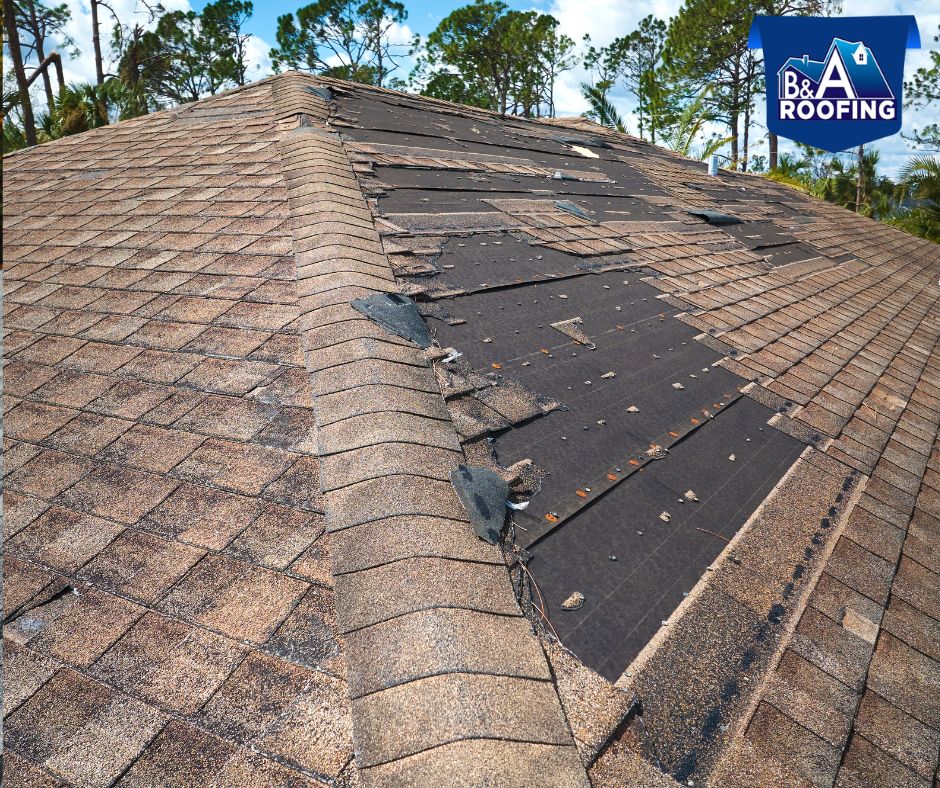
A storm blows through overnight. You wake up, look outside, and the yard looks fine — no obvious debris, no branches down, nothing dramatic. So you assume the roof is fine too. That assumption costs homeowners across the South thousands of dollars every year. Wind damage to a roof is frequently invisible from the ground and often from the street — but it’s doing its work quietly, compromising the seal adhesion on shingles, loosening flashing, and creating the exact conditions that turn into a ceiling stain six months later.
Whether you’re looking for a roof inspection near me at Birmingham, a roof inspection near me at Hattiesburg, or a roof inspection near me at Huntsville, the case for a professional post-storm inspection is the same everywhere in the South: the wind events here are frequent, the damage patterns are specific to Southern roofing materials and installation methods, and the gap between visible damage and actual damage is larger than most people realize.
What Wind Speed Can Damage Your Roof?
FAQ: What wind speed can damage my roof?
Standard 3-tab asphalt shingles are rated to resist wind uplift at 60 to 70 mph under manufacturer specifications, though real-world performance in sustained winds can be lower depending on installation quality, shingle age, and how well the seal tabs have adhered. Architectural shingles typically carry ratings of 110 to 130 mph. Impact-resistant Class 4 shingles may carry ratings up to 150 mph. But here’s the important nuance: damage doesn’t always correlate directly with the peak wind speed. Gusts in the 50 to 60 mph range that hit an aging roof with already-weakened sealant adhesion — common in roofs over 12 to 15 years old in the South — can lift, crack, or partially unseal shingles that would have held in a newer roof at the same wind speed. The inspection question after a storm isn’t just “how fast was the wind?” It’s “how old is the roof, and how much was the sealant already degraded?”
| Wind Speed | Event Classification | Typical Roof Impact | Inspection Priority |
|---|---|---|---|
| 40–55 mph | Strong thunderstorm gusts | Granule loss, minor tab lifting on aging shingles | Moderate — inspect aging roofs |
| 56–75 mph | Severe thunderstorm / weak tornado | Lifted or missing shingles, flashing separation, debris impact | High — inspect all roofs |
| 76–110 mph | EF1–EF2 tornado / Cat 1 hurricane | Large-area shingle loss, flashing torn away, deck exposed | Very High — urgent inspection |
| 111–130 mph | EF2–EF3 / Cat 2 hurricane | Architectural shingles at risk, potential structural damage | Emergency — same-day inspection |
| 130+ mph | Major tornado / Cat 3+ hurricane | Catastrophic — full system likely compromised | Emergency — structural safety check first |
How Wind Actually Damages a Roof — The Mechanics
Most people picture wind damage as shingles simply blowing off. That happens, but it’s actually the least common and most obvious form of wind damage. The more common — and more insidious — pattern is uplift stress: wind creates a low-pressure zone above the roof surface as it moves across it, effectively pulling upward on the shingles. That pulling force doesn’t have to be strong enough to lift a shingle completely to cause damage. It only has to be strong enough to break the seal strip adhesion on the underside of the shingle tab.
Once that seal is broken, the shingle lies back down and looks fine from the ground. But the next rain event drives water under the unsealed tab, directly into the underlayment. Over time, that repeated infiltration compromises the underlayment and eventually the deck beneath it. The damage showed up on your roof the night of the storm — the ceiling stain shows up eighteen months later, and the connection between the two isn’t obvious to anyone who didn’t do an inspection in between.
How Undetected Wind Damage Progresses Over Time
Storm event — seal tabs broken by uplift
Wind pulls upward, breaking the self-seal strip on shingle tabs. Shingles lie back flat. Roof looks undamaged from the ground.
First rain after storm — water enters under unsealed tabs
Rainwater forces under the lifted tab edge. Underlayment absorbs moisture. No interior sign yet.
Weeks to months — underlayment saturated, deck moisture begins
Repeated moisture cycles saturate the underlayment. Deck surface begins absorbing moisture. Mold may begin in attic space.
6 to 18 months — visible interior staining appears
Water has tracked through deck and insulation to ceiling surface. Homeowner calls a roofer. What looks like a small leak may reveal significant deck damage above.
Repair cost: significantly higher than a post-storm inspection would have been
Deck boards replaced, mold remediation potentially required, underlayment and shingles repaired or replaced in affected area. A $200–$400 inspection at Step 1 would have addressed the issue at a fraction of this cost.
How to Tell If Wind Lifted Your Shingles Without Visible Damage
FAQ: How can I tell if wind lifted my shingles without causing visible damage?
From the ground, the signs are subtle and easy to miss. Look for shingles that appear slightly raised at the lower edge — even a few millimetres of lift changes the visual line of the coursing. Look for shingles with a slight “cupped” appearance where they were lifted and re-laid not quite flat. Check the gutters for a heavier-than-usual accumulation of granules — wind events accelerate granule loss, and a significant granule deposit in the gutters after a storm is a flag. Check the attic from inside after dark with a flashlight turned off — any pinpoints of light visible around penetrations or at the deck edges indicate wind-compromised seals. The most reliable method, however, is a professional walk-on inspection: a trained roofer can press-test seal tab adhesion systematically across the roof surface in a way that no ground-level observation can replicate.
Post-Storm Roof Damage Inspection Checklist — What to Check From Ground Level
Shingle coursing lines — walk each elevation and look for any break in the uniform pattern of shingle edges. Lifted or misaligned shingles disrupt the line.
Gutters and downspouts — heavier granule accumulation than usual after a storm indicates surface abrasion and seal stress.
Chimney and vent flashing — binoculars help here. Look for flashing that has lifted, buckled, or pulled away from masonry joints.
Ridge cap shingles — the ridge is the highest-exposure point on the roof and loses cap shingles more frequently than any other zone in high winds.
Attic from inside — check for new daylight at any penetration, new water staining on decking boards, or any evidence of debris penetration through the deck.
Surrounding yard — collect any shingle fragments or granule piles in the yard as documentation for an insurance claim if needed.
Will Wind Damage Affect the Rest of the Roof Over Time?
FAQ: Will wind damage affect the rest of my roof over time?
Yes — and this is the part of the wind damage conversation that doesn’t get enough attention. When wind lifts shingles and breaks seal tab adhesion in one area, it creates a moisture entry point that begins to work on the surrounding materials. Water that enters under an unsealed shingle doesn’t stay contained — it spreads laterally under the overlapping shingles around it, saturating a progressively larger area of underlayment. That moisture causes the adhesive on adjacent shingles to soften and weaken, making them more susceptible to the next wind event at a lower wind speed than they would have been otherwise. One wind event that seems minor can set off a chain reaction that reduces the effective performance of a much larger roof area over the following two to three storm seasons. That’s why post-storm inspection matters even when the damage isn’t obvious — because “not obvious” and “not there” are very different things.
Wind Damage Spread Rate — Unaddressed vs. Professionally Repaired
Approximate percentage of roof area affected over time following a 60 mph gust event on a 15-year-old roof
Prompt professional repair after the storm prevents the cascade entirely. Repair cost: a fraction of 24-month unaddressed outcome.
Approximate illustration based on industry pattern data. Actual spread rates depend on roof age, underlayment condition, subsequent storm frequency, and climate.
Does Homeowner’s Insurance Cover Wind Damage?
FAQ: Does my insurance cover wind damage to my roof?
Most standard homeowners insurance policies cover wind damage as a named peril — but the details in your specific policy matter enormously. Some policies include wind deductibles that are separate from the standard deductible and are expressed as a percentage of the dwelling coverage value rather than a flat dollar amount. A 2% wind deductible on a $300,000 home is $6,000 out of pocket before insurance pays anything — a fact that surprises many homeowners at claim time. Additionally, policies may exclude coverage for roofs over a certain age, or pay out at actual cash value (depreciated) rather than replacement cost value for aging roofs. The single most important thing to do after a wind event is get a professional roof inspection and document the damage with photographs before filing a claim — a claim without documented professional damage assessment is harder to support and easier for an adjuster to minimize.
| Insurance Factor | What It Means for Your Claim | Action to Take |
|---|---|---|
| Named peril coverage | Wind is covered only if explicitly listed — most standard policies include it | Confirm “wind” is listed in your declarations page |
| Wind / hurricane deductible | May be 1–5% of dwelling value — much higher than standard deductible | Know your deductible structure before filing |
| Replacement cost vs. ACV | ACV policies depreciate payout based on roof age — older roofs get less | Upgrade to replacement cost value if not already covered |
| Roof age exclusions | Some policies won’t cover roofs over 20 years old or require higher deductibles | Check policy terms for age-related exclusions |
| Documentation requirement | Claims without professional inspection reports are harder to support | Get written inspection report before filing |
| Filing timeline | Most policies have a claims filing window after the event — typically 1 year | File promptly — don’t wait for visible damage to appear |
According to the National Association of Insurance Commissioners’ consumer guide to homeowners insurance, wind and hail are consistently the most frequently claimed perils under homeowners policies across the South and Southeast. Understanding your coverage before a storm — not after — is the difference between a claim experience that works for you and one that surprises you at the worst time.
What Roofing Upgrades Best Protect Against High Winds?
FAQ: What roofing upgrades best protect against high winds?
The highest-impact upgrades for wind resistance, in order of effectiveness: first, upgrade from standard 3-tab shingles to architectural or impact-resistant shingles with a wind rating of 130 mph or higher — the seal adhesive systems in modern architectural shingles are dramatically better than those in 3-tab products. Second, ensure a proper starter strip is installed at eaves and rakes — this is the first line of defense against wind infiltrating under the lower edge of the roof, and it’s frequently skipped on budget installations. Third, specify 6-nail fastening patterns rather than the standard 4-nail pattern in high-wind zones — the additional fasteners reduce uplift significantly at relatively low added cost. Fourth, address flashing integrity at all penetrations and transitions — lifted or degraded flashing is the most common entry point for wind-driven rain even when the shingles themselves hold. Fifth, evaluate whether a metal roofing system is appropriate for your property — properly installed standing seam metal with concealed fasteners outperforms any shingle system in sustained high winds.
| Upgrade | Wind Rating Improvement | Relative Cost Add | Insurance Benefit |
|---|---|---|---|
| 3-tab → architectural shingle | 60–70 mph → 110–130 mph | Low — 10–20% material cost increase | Possible premium reduction |
| Class 4 impact-resistant shingle | Up to 150 mph rated | Moderate — 20–40% over standard arch | 5–30% premium discount (insurer-specific) |
| 6-nail vs. 4-nail fastening | Significant uplift reduction at edge zones | Very Low — labor only, negligible | Required in some high-wind code zones |
| Proper starter strip at eaves and rakes | Prevents edge lift — critical first-line defense | Very Low — minimal material cost | Often required by manufacturer warranty |
| Standing seam metal roof | 140+ mph — highest residential rating | High — 2–3× shingle system cost | Significant premium discounts in many markets |
Wind Resistance Ratings by Roofing System
Rated mph resistance under standard manufacturer testing conditions — not guaranteed in all real-world installation conditions
Ratings reflect manufacturer-tested performance under standard conditions. Real-world performance depends on installation quality, deck condition, fastening pattern, and roof geometry. Consult your contractor for wind zone-specific recommendations.
Material-Specific Wind Damage Considerations
Not all roofing materials respond to wind damage the same way, and understanding the specific failure patterns of your material helps you know what to look for after a storm event.
For metal roofing systems, wind damage typically manifests as fastener back-out on exposed fastener systems, or as seam separation and panel lifting on standing seam systems under extreme events. The long-term performance of a metal roof in high-wind environments also depends on the coating system maintaining its integrity — a degraded or peeling coating creates surface irregularities that increase wind uplift pressure. Understanding your options for the best paint for metal roof surfaces includes considering how coating maintenance affects the wind resistance profile of the system over time.
For flat commercial roofs, the perimeter edges and parapet terminations are the highest wind-risk zones — the low-pressure zone created by wind moving over a flat roof surface creates significant uplift at the edges, and a poorly secured membrane edge can peel back under sustained gusts. The interaction between drainage design and wind is also worth noting: a flat roof drainage system that allows ponding after a storm adds weight load to an already wind-stressed membrane, compounding the damage from both events simultaneously.
Why a Post-Storm Roof Inspection Near You Matters
A professional roof inspection after a significant wind event is not the same as a homeowner walking around the yard looking at the roof from the ground. It involves a walk-on inspection that systematically tests seal tab adhesion across the full roof surface, checks every flashing transition and penetration, assesses the ridge cap condition, and documents findings photographically for insurance purposes. In most cases, a professional post-storm inspection is also the first step required by your insurer to support a wind damage claim.
For a roof inspection near me at Birmingham, where spring storm activity is concentrated and wind events can be significant in the absence of a named weather event, scheduling a post-storm inspection within 48 to 72 hours gives you the cleanest documentation window and the earliest possible response to damage that would otherwise compound through the next rain cycle. For a roof inspection near me at Hattiesburg, the Gulf-adjacent storm pattern means there’s rarely a long gap between a wind event and the next rain that will test whatever damage occurred. And for a roof inspection near me at Huntsville, the transitional climate means fall and spring wind events can catch roofs in their most vulnerable seasonal state.
Our experience with commercial roof installation tupelo and commercial property inspections across the region gives us a clear framework for the specific failure patterns that Southern wind events create — and we bring that same systematic approach to every residential and commercial inspection we perform. Understanding realistic roof repair cost tupelo mississippi figures also helps property owners benchmark the cost of professional repair against the cost of deferred damage — a calculation that almost always favors prompt professional attention.
Whether your property is in Mississippi, Alabama, or Georgia, the same pattern applies. A reliable clarke county roofing company brings local storm pattern knowledge to every inspection in that region. And homeowners and investors looking for a trusted roofing contractor athens al property owners depend on across the state line will find the same systematic, documentation-first inspection process.
The Bottom Line
Wind damage to a roof is one of the most common, most underdiagnosed, and most preventable causes of expensive interior water damage in the South. The inspection that costs a few hundred dollars in the days after a storm is the one that prevents the repair bill that arrives a year later with a much larger number attached. Don’t let a roof that looks fine from the street convince you it is fine — the damage that matters is the kind you can’t see from the ground.
At b & a roofing, post-storm inspections are something we take seriously — because the documentation we produce matters for your insurance claim, and because catching damage early is genuinely better for your roof and your wallet than waiting for a ceiling stain to confirm what was already true. If you’ve had a significant wind event recently, B&A Roofing is ready to get on the roof and tell you exactly what’s there.