
Roof Maintenance Plan for Metal Roofs in Cullman Alabama: A Complete Guide
❓ FAQ: Do metal roofs in Cullman need a maintenance plan?
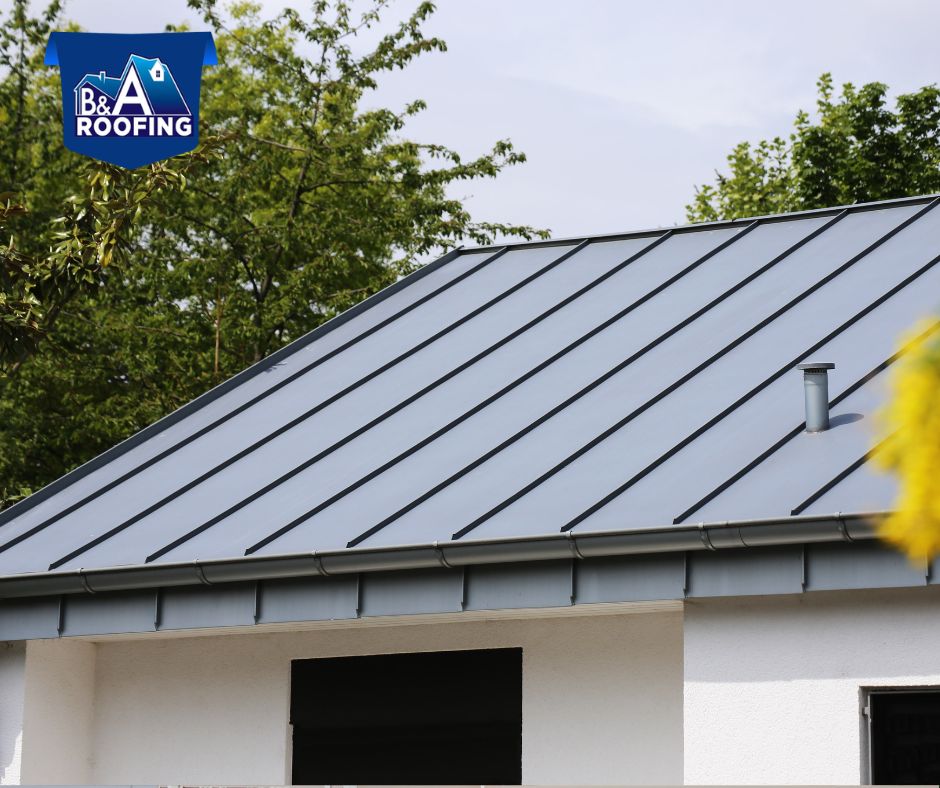
This is the question that most metal roofing manufacturers would rather not advertise the answer to — because the answer is yes, and the reason why is specific to the product category. A metal roof has a dramatically different maintenance profile from an asphalt shingle system. It does not need annual granule loss assessment, shingle sealing strip evaluation, or the biological growth monitoring that asphalt requires in Cullman’s humid climate. What it does need — and what distinguishes a 50-year metal roof from one that requires significant structural repair at year 20 — is a coating maintenance schedule, a fastener integrity assessment, and a seam and penetration inspection that is specifically calibrated to the thermal movement patterns that Alabama’s wide temperature range imposes on a metal system.
Cullman County’s climate creates metal roofing maintenance demands that northern markets do not face in the same way. Alabama’s summer heat cycles bring roof surface temperatures above 160°F on uncoated or lightly coated metal panels. The thermal expansion that occurs at those temperatures, followed by the contraction of Cullman’s winter cold snaps, imposes repeated stress on every fastener, seam, and penetration collar in the system. Over 5 to 10 years without inspection, fasteners that were correctly torqued at installation can back out partially under this repeated thermal cycling, creating micro-gaps at the penetration point that are invisible from the ground but constitute active moisture entry points under the next wind-driven rain event. A metal roof plan Cullman AL inspection that identifies and re-torques backed fasteners at years 5 and 10 prevents the progressive failure that catches unmaintained metal roof owners by surprise at years 12 to 15. Our comprehensive roofing services across Cullman County include metal-specific maintenance plans that are structured around the actual failure modes of metal roofing in Alabama’s climate rather than a generic inspection checklist that treats metal the same as asphalt. According to U.S. Department of Energy guidance on cool roof systems, reflective metal roofing coatings can reduce cooling energy costs by 10 to 15 percent in hot climates — and maintaining that coating’s reflectivity through scheduled recoating is what delivers that energy savings throughout the roof’s service life rather than only in its first years.
The Metal Roof Maintenance Timeline: What Happens at Each Stage
What a Metal Roof Maintenance Plan Includes in Cullman County
❓ FAQ: What does a roof maintenance plan for a metal roof include in Cullman?
A complete metal roofing maintenance Cullman Alabama plan from B&A Roofing is structured around the five distinct failure modes that the Alabama climate imposes on metal roofing systems over their service life. First: coating condition and reflectivity assessment. A metal roof’s coating is not cosmetic — it is the primary protection against UV-induced corrosion of the base metal, and its reflectivity is what delivers the system’s energy efficiency benefit. Every plan inspection includes a close-up coating condition assessment that distinguishes surface oxidation (cosmetic) from chalk-through failure (functional) and specifies whether the coating can be addressed with a topcoat or requires a full recoat cycle. Second: fastener torque and backing assessment. Metal roofing fasteners are installed with a specific torque specification that seals the penetration collar against the panel surface. Alabama’s thermal cycle backs fasteners out of that specification over time. Every plan inspection includes a sample-point fastener torque check across all panel field zones, with a full fastener survey at years 5 and 10.
Third: seam integrity at high-stress locations. The standing seam lock at ridge sections, hip transitions, and valley entries is subject to the highest thermal movement stress in the system. These seams are assessed at close range for any gap that has developed at a lock joint. Fourth: penetration collar and sealant condition. Every pipe boot, HVAC flue collar, and chimney or skylight penetration is assessed for sealant adhesion and rubber or silicone collar integrity. Metal roofing’s thermal movement is more dramatic than asphalt’s, which means penetration collars experience more stress per seasonal cycle than the same collar on an asphalt system. Fifth: drainage performance. Metal roofing delivers higher runoff velocity than asphalt because the surface provides less resistance to flow — which means gutter and downspout capacity is more critical, and blockages produce overflow events more quickly than the same blockage on an asphalt system. Our guide on the best paint for metal roof systems covers the specific coating grades and application standards relevant to Cullman County’s Alabama climate, from primer requirements through topcoat selection and recoating cycle timing. Our guide on a properly designed flat roof drainage system covers drainage design for properties that have a metal section over a flat or low-slope secondary roof, where the two systems interact at the drainage interface.
The Complete Metal Roof Inspection Checklist for Cullman County Properties
🎨 Coating Condition Assessment
Every panel field zone is assessed for chalk-through failure, which indicates UV degradation below the topcoat has reached the primer layer. Surface oxidation is classified separately from functional coating failure to distinguish cosmetic from performance issues. Reflectivity reduction at the chalk-through stage typically produces measurable increases in summer cooling load. Assessment determines whether the system needs a topcoat (surface correction) or a full recoat (primer and topcoat replacement).
🔧 Fastener Torque and Backing Check
Sample-point fastener torque verification across all panel field zones, plus any fastener showing visual evidence of backing out. A backed fastener creates a micro-gap at the neoprene washer seal that is the primary source of active infiltration on metal roofing over 10 years old. Backed fasteners identified at inspection are re-torqued or replaced at plan repair rates, preventing the progressive failure that catches homeowners by surprise at year 12 to 15.
🔗 Seam Lock Integrity
Standing seam lock connections at ridge, hip, and valley transitions are assessed close-up for any gap development from thermal movement. The lock joint at the ridge is the highest-stress seam on the system because the thermal expansion from south-facing and north-facing panels both terminate there. Any gap visible at lock joints indicates the joint has cycled beyond its designed range and requires resealing before the next driving rain event.
💧 Penetration Collar Integrity
Every pipe boot, HVAC flue collar, and roof penetration is assessed for rubber degradation, sealant adhesion, and collar separation from the panel surface. Metal roofing’s thermal cycling imposes more movement stress on penetration collars than asphalt does. Boot collars on metal roofing typically need replacement every 12 to 15 years regardless of the base metal’s condition — a scheduled maintenance item, not a failure event, when the plan is in place.
🚰 Cut Edge Corrosion Assessment
Every cut edge in the metal panel system — at ridge caps, valley trim, rake edge, and any penetration cut — is assessed for edge corrosion. Cut edges expose the bare metal below the factory coating and are the locations where corrosion originates on metal roofing systems. Identifying early-stage edge corrosion at inspection and applying a corrosion-inhibiting treatment extends the effective life of the affected panel section by 10 to 15 years beyond what untreated edge corrosion would allow.
📊 Gutter and Drainage Performance
Metal roofing delivers runoff at higher velocity than asphalt shingles because the smooth panel surface provides minimal flow resistance. This higher velocity requires gutter sections to be fully clear and properly sloped to function as designed. Every gutter section, downspout connection, and drain opening is tested for flow rate and cleared of debris at every plan inspection visit. Gutter overflow on a metal roof delivers water to the fascia and soffit at a rate that accelerates wood deterioration faster than the same overflow on an asphalt system.
Coating Maintenance: The Central Element of Metal Roof Longevity in Alabama
| Coating Grade | Typical Alabama Service Life | Recommended Recoat Cycle | Energy Savings Impact | B&A Assessment at Plan Inspection |
|---|---|---|---|---|
| Standard polyester topcoat | 8 to 12 years in Cullman sun exposure | Years 8 to 10 | Moderate — degrades to minimal after year 10 | Chalk-through assessed annually after year 5 |
| Silicone-modified polyester (SMP) | 15 to 20 years in Alabama conditions | Years 15 to 18 | Good — retains reflectivity through full cycle | Chalk and gloss loss assessed at years 5, 10, 15 |
| Kynar 500 PVDF | 20 to 30 years in Alabama conditions | Years 22 to 25 | Excellent — highest retained reflectivity over time | Gloss retention assessed at years 10, 15, 20 |
| Ceramic-particle elastomeric recoat | Adds 15 to 20 years when applied correctly | Applied at any recoat milestone | Excellent — solar reflectance above 0.65 when new | Adhesion and cracking assessed at every visit after application |
| Acrylic topcoat (recoat product) | 8 to 12 years as a recoat | Recoat at years 8 to 10 again | Good initially — degrades faster than PVDF | Chalk and adhesion assessed at years 3 and 7 post-application |
❓ FAQ: How does a roof maintenance plan extend my metal roof’s life in Cullman?
The roof maintenance plan metal Cullman approach extends service life through three compounding mechanisms that each add years independently and together produce the difference between a 30-year metal roof outcome and a 50-year one. First: coating maintenance timed to the degradation curve rather than a calendar year. A homeowner who recoats at year 10 because that is when they noticed the chalking has already lost 2 to 3 years of the recoat’s protective window compared to the plan homeowner whose year 8 inspection specified the recoat before chalk-through reached the primer layer. The earlier recoat application bonds to a sound topcoat surface rather than a compromised one, delivers better adhesion, and lasts longer. Second: fastener correction before the moisture entry window opens. A backed fastener discovered at a year 5 or year 10 plan inspection is a $15 to $25 repair item. The same fastener discovered after it has allowed moisture to reach the decking below — after 3 to 5 years of that micro-gap being exercised by every thermal cycle — becomes a structural repair involving panel removal, decking remediation, and panel reinstallation that costs $1,500 to $4,000 per zone.
Third: cut edge and penetration collar replacement on a proactive schedule rather than a reactive one. Metal roof penetration collars need replacement every 12 to 15 years. A plan that schedules that replacement at year 13 as a maintenance item costs $200 to $350 per collar. A collar discovered at year 16 because it began actively leaking has produced decking moisture that requires structural assessment and potentially decking section replacement before the new collar can be installed correctly. The total repair cost in the reactive scenario is $800 to $2,500 per penetration. Our fascia installation cullman al and Cullman County team handles every element of the metal maintenance plan from coating assessment through fastener survey and penetration collar replacement. Our huntsville roof team in adjacent Madison County, our roofing contractor in birmingham office in Jefferson County, and our commercial roof installation tupelo team in North Mississippi all offer metal-specific maintenance plans structured around the same Alabama-climate failure mode model. For shingle roofing properties in Cullman County considering an upgrade to metal as part of a maintenance plan transition, our guide on roof shingles brands covers the comparison of impact-resistant asphalt options against metal as a long-hold decision, and our guide on new roof costs provides the replacement cost benchmarks that make the metal vs. asphalt economics concrete.
Alabama-Specific Factors That Make Cullman Metal Roof Maintenance Different
Cullman County’s combination of high UV intensity, wide thermal swing range, above-average hail frequency, and high annual rainfall creates a metal roofing maintenance environment that is more demanding than the national average on every relevant dimension. A maintenance plan calibrated to these specific stressors — rather than a generic schedule designed for the national average — is what converts the metal roof’s 50-year potential into 50 years of actual performance.
The B&A Roofing Metal Roof Maintenance Plan: What Cullman Homeowners Get
- Alabama-calibrated inspection schedule — annual inspections in years 1 to 5 to establish the baseline, biannual thereafter, with milestone assessments at years 5, 10, 15, and 20 that focus specifically on the thermal cycling failure modes that are most active in Cullman County’s climate.
- Coating condition assessment at every visit with specific recoat timing recommendation — not “looks okay” or “getting a bit chalky.” A written assessment that distinguishes cosmetic oxidation from functional chalk-through and specifies the recoat window, the recommended coating grade, and the application standard relevant to the existing system.
- Fastener torque survey at years 5 and 10 with re-torque or replacement as needed — the single most financially impactful metal-specific maintenance action available. Discovering and correcting backed fasteners at the inspection stage rather than the leaking stage is worth $1,000 to $3,500 per zone in avoided reactive repair cost.
- Penetration collar replacement on a proactive schedule — boot collars at years 12 to 15 as a maintenance line item rather than an emergency repair trigger. The difference between $250 planned and $1,800 reactive on each collar is the maintenance plan economics in miniature.
- Written condition reports that maintain warranty and insurance documentation — every visit produces a dated, signed condition report that satisfies manufacturer warranty maintenance requirements and creates the pre-storm condition baseline that supports storm damage insurance claims.
Call our Cullman office at (256) 692-5527 to discuss the B&A Roofing metal roof Cullman maintenance plan tier appropriate for your specific system, installation year, and current coating condition.
One number worth remembering: A standing seam metal roof correctly installed and maintained through a complete schedule in Cullman County delivers 50 or more years of functional service. An identical roof without a maintenance plan typically requires significant structural intervention at years 15 to 20 due to fastener failure and coating degradation compounding into active moisture infiltration. The maintenance plan cost over 20 years runs $12,000 to $24,000. The structural intervention on the unmaintained system costs $8,000 to $20,000 — and still leaves a system that needs a full recoat and fastener replacement program to reach its design life. The plan is structurally cheaper, cheaper in absolute dollars, and produces a better outcome. That is an unusual combination in home maintenance economics, and it is specific to metal roofing.
Protect Your Metal Roof Investment. Start the Plan That Delivers 50 Years.
B&A Roofing provides free metal roof condition assessments across Cullman County, with a written coating condition report, fastener survey, and maintenance plan recommendation specific to your system. GAF Master Elite® certified. No pressure. The assessment findings speak for themselves.
Get Your Free Metal Roof AssessmentFree assessments · Metal-specific maintenance plans · Coating assessment included · Cullman County and North AL · (256) 692-5527