
Roof Decking Rot: Why It Matters During a Reroof in Hattiesburg
Why Hattiesburg Roofs Develop Decking Problems More Often Than the National Average
Roof decking rot in Hattiesburg is not random bad luck. It is the predictable outcome of specific climate and construction factors that the Pine Belt region experiences at a higher intensity than most American housing markets. Understanding those factors explains both why the problem is so common and what future maintenance practices reduce the odds of encountering it on the next roof system.
What Actually Causes Decking Rot: The Six Paths to Structural Damage
🚰 Slow Flashing Infiltration
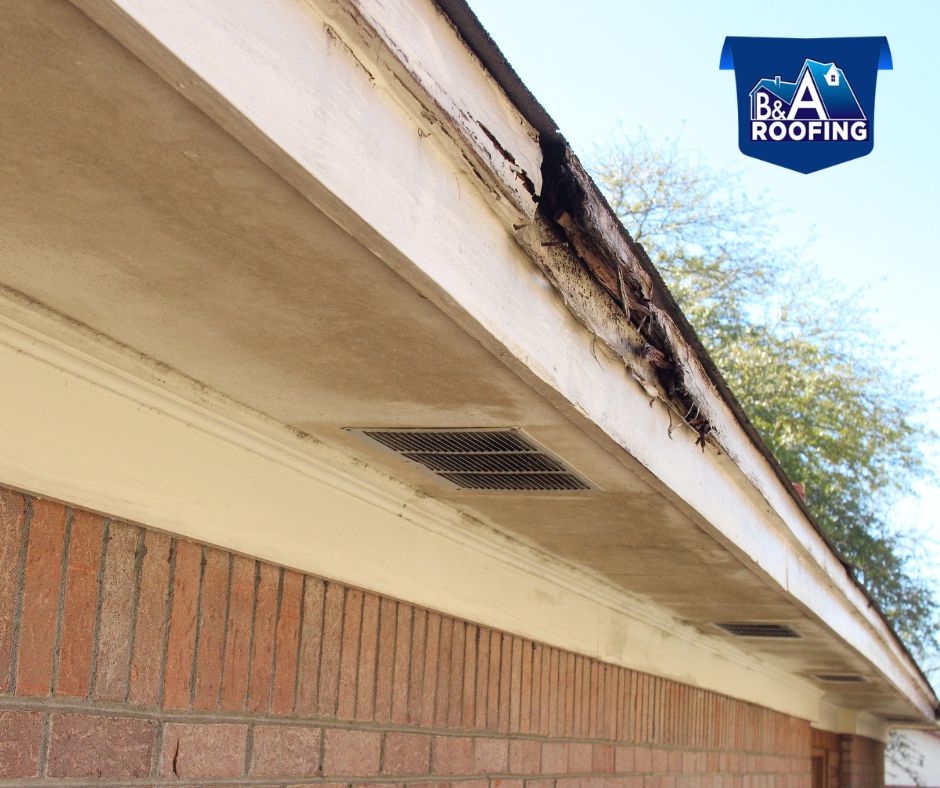
The most common path to decking rot is not a dramatic roof failure but a minor flashing failure that allows water entry in quantities too small to produce interior staining but large enough to wet the decking repeatedly over months or years. Chimney flashings, pipe boots, ridge cap laps, and valley edges are the most common entry points. The moisture reaches the decking, the decking wets and partially dries repeatedly, and fungal growth begins within the wood fibers.
💧 Attic Condensation Accumulation
An inadequately ventilated attic in Hattiesburg’s humid climate becomes a moisture accumulator. Warm, humidity-saturated air rises from the living spaces below, contacts the cooler underside of the roof deck in the morning before the attic heats up, and condenses. Repeated condensation cycles wet the deck underside from below rather than from above — a failure mode that is invisible from the roof surface and produces rot patterns that look like interior moisture origin rather than roof leak origin.
🌳 Tree Impact and Branch Contact
Pine Belt tree canopy means branches over rooflines are a normal part of Hattiesburg residential life. Branches that rest against or intermittently contact the shingle surface create localized abrasion that accelerates granule loss at the contact point, thinning the protective surface exactly where the branch also deposits moisture and organic debris. Over several years, this combination creates a specific soft spot at the branch contact location.
⚡ Storm Event Flashing Displacement
Hattiesburg’s 2013 and 2020 tornado events and the annual severe thunderstorm seasons produce wind events that displace or partially separate flashing systems. Repairs made under emergency conditions — particularly after major storm events when contractor capacity is strained and homeowners are desperate for any available crew — are not always complete. A flashing that looks repaired from the surface may still be allowing slow water infiltration at a concealed lap or adhesive failure point.
🧬 Original Decking Material Degradation
Homes built before the widespread adoption of exterior-grade plywood and oriented strand board in the 1980s and 1990s may have board decking — planks of dimensional lumber nailed directly to the rafters. This decking type, common in Hattiesburg’s older neighborhoods near downtown and along historic residential corridors, absorbs moisture more readily than modern panel products and develops gaps between boards over time that become moisture infiltration pathways.
🚫 Bath Fan Discharge into Attic
An extremely common Hattiesburg construction defect: bathroom exhaust fans that terminate in the attic space rather than venting through the deck or gable to the exterior. Every shower pumps warm, saturated air directly into the attic, where it immediately contacts the cooler deck underside and condenses. In Forrest County’s hot, humid summers, a family of four using multiple daily showers can introduce several pints of liquid water per day into an attic through this pathway.
❓ FAQ: How do I know my roof deck is rotted?
From outside the home, the most reliable indicator is the presence of soft spots on roof surfaces that depress when you walk across them. A healthy roof deck feels solid and springy — like a wood floor. A rotted deck section feels spongy, soft, or hollow underfoot, with a distinctive give that tells you the wood fibers beneath have lost structural integrity. From the street, you may notice subtle waviness or sagging in roof lines that should be straight — this is often visible on hip and ridge lines on homes with significant decking deterioration. In the attic, staining on the underside of the sheathing, soft spots visible as discolored wood, visible biological growth, daylight showing through gaps in older board decking, and any wet or saturated insulation directly below the deck surface are all clear indicators.
The most important thing to understand about decking rot diagnosis is that it is genuinely invisible from outside the home before tear-off in most cases. A roof that looks perfectly serviceable from the street — with shingles that appear intact and no ceiling stains inside — can have significant decking deterioration underneath. This is why B&A Roofing includes an attic inspection as part of every project assessment in Hattiesburg, not just as an add-on when the homeowner specifically suspects a problem. In Forrest County’s humid climate, we have learned that a visual-only exterior inspection misses decking issues too often to be adequate. For comprehensive regional context on what decking replacement adds to a project budget, our guide on new roof costs across Mississippi markets covers the per-sheet decking replacement cost alongside base shingle installation benchmarks.
Decking Damage Severity: How to Classify What the Tear-Off Reveals
Why the Pine Belt Makes Decking Discovery More Likely in Hattiesburg Than in Other Markets
When B&A Roofing completes a reroof project in Hattiesburg, decking replacement is a more frequent occurrence than on comparable projects in our North Alabama or North Mississippi markets — and the reason is specific to Forrest County’s climate rather than a reflection of construction quality in the area. The combination of factors is compounding rather than additive: high annual rainfall soaks the roof surface more frequently, dense Pine Belt canopy extends the drying window after each event, high humidity prevents rapid evaporation of what moisture does infiltrate, and the warm winters that are more moderate than inland Mississippi markets keep fungal activity at active levels year-round rather than pausing during cold months. A slow flashing failure in Morgan County, Alabama might take five or six years to produce meaningful decking deterioration. The same failure in Forrest County, Mississippi can produce equivalent deterioration in three to four years because every one of those climate factors is working in the rot’s favor simultaneously.
The storm history compounds the baseline climate effect. The significant tornadoes that struck the Hattiesburg metro in 2013 and 2020 produced widespread damage that was repaired under emergency conditions and at compressed timelines. Many of those repairs addressed the visible damage correctly but missed slow infiltration pathways — a separated step flashing that appeared sound, a reused pipe boot that had developed a hairline crack, a ridge cap section that was renailed but not fully sealed at the lap. Five to ten years later, those missed pathways have delivered enough cumulative moisture to the decking below that the current reroof reveals structural damage that the homeowner had no reason to suspect was developing.
❓ FAQ: How is decking replacement priced?
Roof decking replacement Hattiesburg contractors price by the sheet for standard 4-by-8 panel decking (OSB or plywood), with a per-sheet price that includes the material, additional labor, and fastening. In the current Hattiesburg market, a reasonable range for full-replacement decking work during a reroof project is $75 to $125 per sheet, which represents the total of materials and the additional labor required relative to a project where the existing decking is sound. On a standard Hattiesburg residential home with a 20-square roof (2,000 square feet of roofing surface), a full deck replacement would involve roughly 60 to 75 sheets of decking and add $4,500 to $9,000 to the project cost.
In practice, most Hattiesburg homes do not require full deck replacement — they require spot replacement of the sheets that show active deterioration at tear-off. A typical Hattiesburg reroof might reveal 5 to 15 sheets of compromised decking concentrated in specific zones: north-facing slopes where the Pine Belt canopy keeps sections shaded longest, areas surrounding chimney or pipe boot penetrations where slow flashing infiltration has been occurring, and ridge zones on homes with old or compromised ridge cap systems. The spot replacement of 8 sheets at $100 per sheet adds $800 to the project — a meaningful but manageable addition to a project budget that most homeowners absorb without difficulty once they understand that the alternative is new shingles on a structurally compromised substrate. The per-sheet unit price should be specified in the original project scope before work begins — not presented as a surprise number after the crew is already on the roof. Any honest roof sheathing replacement Hattiesburg contractor includes the per-sheet contingency rate in the written estimate, so you know exactly what additional sheets will cost before you commit to the project.
Per-Sheet Decking Cost Breakdown: What Goes Into the Price
Budget a per-sheet contingency on every Hattiesburg reroof project. On homes over 15 years old with Pine Belt canopy, planning for 10 to 20 sheets of contingency replacement is realistic. On homes near the 2013 or 2020 tornado damage zones, budget higher — the discovery rate in those neighborhoods consistently runs above average.
OSB vs. Plywood for Replacement Decking: What to Specify
| Decking Type | Performance in Hattiesburg Humidity | Cost Comparison | Moisture Exposure | B&A Recommendation |
|---|---|---|---|---|
| OSB (7/16 inch, Exposure 1) | Adequate with proper installation | Lowest cost | Moderate — swells at edges if exposed | Standard for most residential replacement in MS market |
| OSB (Exposure 1, 5/8 inch) | Better than 7/16 in humid climates | Low to moderate | Better edge performance than 7/16 | Preferred on homes with history of slow infiltration |
| Plywood (1/2 inch, Exterior grade) | Better moisture resistance than OSB | Moderate | Holds dimensional stability better when wet | Recommended for replacement in chronically wet zones |
| Plywood (5/8 inch, CDX or better) | Best available panel product for wet climates | Higher | Excellent moisture resistance; does not delaminate as readily | Recommended for heavy-canopy north-facing slopes |
| Original board decking (1×6, 1×8) | Absorbs moisture readily; gaps allow infiltration | High labor cost | Poor — not appropriate for Hattiesburg climate | Replace with panel product when reroofing over board decking |
❓ FAQ: Can shingles go over bad decking?
Technically, shingles can be nailed to a rotted deck in the sense that the physical act of installation is possible. Whether doing so meets code, warranty requirements, or any reasonable standard of professional workmanship is a different question, and the answer to all three is no. Building codes in Mississippi and across our Southeast markets require that roof sheathing be structurally sound and capable of holding fasteners adequately before new roofing material is applied. A decking sheet that has lost fastener-holding capacity due to rot cannot adequately anchor the shingle nail that is supposed to hold that shingle in place during a severe thunderstorm. The shingle that looked correctly installed at the end of the project day will pull free at a fraction of its rated wind resistance because the nail is held by deteriorated wood rather than structurally sound material.
The warranty implications are equally clear. GAF, CertainTeed, Owens Corning, and every major shingle manufacturer specify in their installation guidelines that shingles must be installed over structurally sound decking. An installation over compromised decking voids the material warranty and, more importantly, voids the workmanship warranty from any contractor who installs over known bad decking without correcting it first. A contractor who proposes to install shingles over soft or deteriorated decking to save a few hundred dollars on a project is proposing an installation that will fail faster than a correctly installed system, that carries no warranty protection, and that will likely need to be fully redone at the homeowner’s expense within five to seven years rather than lasting the system’s rated lifespan. In Hattiesburg’s storm market, where the new roof system is expected to handle the next severe weather season adequately, installing over compromised decking is not a cost-saving shortcut — it is a liability. Our comprehensive roofing contractor in birmingham team, our commercial roof installation tupelo office, our huntsville roof team, and our fascia installation cullman al and broader Cullman County team all follow the same standard: no new shingles go down over compromised decking regardless of project timeline pressure.
What Happens When a Bid Skips the Decking Contingency
One of the most common situations B&A Roofing encounters when a Hattiesburg homeowner calls after a project with a cheaper contractor is the discovery that the lower-bid contractor installed new shingles over sections of compromised decking to avoid the conversation and the additional cost. The tell is usually a shingle that is pulling free in a localized area within two or three storm seasons, in a pattern that does not match the surrounding field — because the fasteners in the compromised zone are releasing while the fasteners in the sound zones are holding. By the time the pattern is visible from the ground, the underlying issue has typically worsened, and the correction scope is now both a decking replacement and a partial shingle replacement in the affected area.
For homeowners evaluating competing bids on a Hattiesburg reroof, the decking contingency is one of the most revealing line items in the scope. A bid that specifies a per-sheet replacement rate for decking discovered at tear-off is telling you that the contractor plans to assess the decking honestly and charge transparently for what needs to be replaced. A bid that says nothing about decking contingency, or that includes decking replacement as part of the base price without having seen the existing deck, is telling you that either the contingency is not accounted for or that the contractor intends to install over whatever is found rather than replacing it. When comparing bids on any Forrest County reroof project, ask specifically: what is your per-sheet replacement rate for decking found to be compromised at tear-off, and will I be shown photographs of any compromised sections before the replacement decision is made? Those two questions separate the transparent bidders from the ones who hide the question until there is no practical option to change contractors.
How B&A Roofing Handles Decking Discovery in Hattiesburg
- Attic inspection before tear-off begins — we inspect the attic before the first shingle comes off the roof. Staining on the sheathing underside, soft spots visible from below, and saturated insulation all show in the attic before they are confirmed from above, giving us a preliminary map of the zones most likely to require replacement.
- Per-sheet contingency rate in every written estimate — our base estimate includes the per-sheet replacement rate for OSB or plywood decking discovered to be compromised at tear-off. You know the cost per sheet before the project starts, not after the crew has already committed to the job.
- Photographs before replacement is authorized — every compromised sheet is photographed before replacement and the images are included in the project documentation provided to the homeowner. You see exactly what was replaced and where, with visual evidence of the condition that justified the replacement decision.
- No new shingles over compromised decking — ever — this is a firm standard across every B&A project in every market. It is documented in our project scope language and it never varies based on project timeline pressure or homeowner cost sensitivity.
- Post-replacement ventilation assessment — when decking rot is discovered, the moisture source that caused it is identified and addressed before new material goes down. Bath fan termination, flashing failures, attic ventilation deficiencies, and any other contributing pathway are documented and corrected so the new decking has the best possible protection against recurrence.
B&A Roofing’s Hattiesburg office at 5 Rivers Drive serves Forrest County and South Mississippi with the full range of our roofing services, including decking assessment and replacement as a fully integrated part of every reroof project. For homeowners comparing shingle product options after decking is confirmed as sound, our guide on roof shingles brands covers which GAF, CertainTeed, and Owens Corning product tiers are appropriate for Forrest County’s climate and storm exposure. For commercial properties with flat roof sections adjacent to the primary slope where drainage management affects decking longevity at the transition, our guide on how a properly designed flat roof drainage system integrates with sloped sections provides relevant context on how water management at the slope-to-flat interface protects both systems. For metal roofing alternatives where the decking interface concerns differ meaningfully from asphalt systems, our guide on the best paint for metal roof coatings explains the ventilation gap requirements that keep metal panel systems from creating condensation issues at the underside of the deck regardless of the material below.
The post-storm timing problem in Hattiesburg: The demand surge following a major storm event in Forrest County compresses the timeline within which homeowners can be selective about contractor choice. When every certified roofer in the market is booked four to eight weeks out, the pressure to accept the crew that can show up next week is real — and that pressure is exactly when the shortcuts are most likely to happen. A contractor who can arrive immediately after a major storm event often can because other homeowners evaluated the same contractor and declined. Having a relationship with a certified local contractor before the storm happens is the most effective protection against that pressure situation. According to FEMA guidance on hurricane and severe storm home inspections, structural roof deck integrity is one of the primary determinants of a home’s ability to resist storm-driven water infiltration — making proper decking assessment and replacement one of the highest-value structural investments available to any Hattiesburg homeowner.
The easiest way to find decking concerns before scheduling a reroof: Go into your attic on a dry, bright afternoon and look up at the sheathing underside with a flashlight. Any section that shows water staining (dark rings or streaks), discoloration, or visible softness when you press on it with a finger is a candidate for replacement. Photograph what you find and bring those photos to the contractor conversation — it gives them an attic-side baseline and signals to any contractor you meet that you understand what is being assessed.
Reroof Coming Up? Know What Is Under the Shingles First.
B&A Roofing provides free roof and attic assessments across Hattiesburg and Forrest County. Every estimate includes a per-sheet decking contingency rate, an attic inspection before tear-off, and photographic documentation of any compromised sections. GAF Master Elite® certified. No shortcuts on decking.
Get Your Free Hattiesburg Roof AssessmentFree inspections · Attic assessment included · Per-sheet contingency in every estimate · Forrest County and South MS · (601) 202-1608