


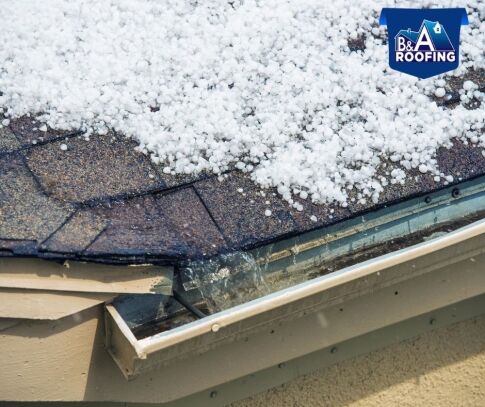
Freezing Rain and Ice Storms: Roof Risks in Tupelo
Does Ice Actually Happen in North Mississippi? More Often Than Most Homeowners Realize
There is a common underestimation of winter weather risk in North Mississippi. Lee County is far enough north to receive meaningful winter weather on a recurring basis, but far enough south that most homeowners do not have the winter-roof awareness that northern markets develop as a matter of course. The result is a specific vulnerability: roofing systems in Tupelo are designed and installed for a climate that is primarily warm and humid, which is appropriate for the majority of the year, but that same climate means that when ice events do arrive, they find roofing systems and drainage configurations that have no dedicated winter-weather accommodation.
❓ FAQ: Does ice affect roofs in this area?
Yes, and in ways that are genuinely different from the hail and wind damage that Lee County homeowners are more accustomed to preparing for. The primary mechanism of ice storm roof damage Tupelo properties experience is freeze-thaw cycling at existing small gaps in the roofing assembly. Water that enters a minor flashing gap or a hairline sealant crack during the liquid phase of a winter rain event expands by approximately 9 percent when it freezes. That expansion pries the gap wider — slightly — than it was before. When the ice thaws, water enters the now-slightly-wider gap in larger volume. Over multiple freeze-thaw cycles during a single ice event, gaps that were too small to produce interior staining during warm-season rain events become large enough to allow meaningful infiltration.
The second ice-specific damage mechanism is ice damming at eave sections. Tupelo homes are not typically built with the ice-and-water shield at the eave line that is standard in northern markets, because the design assumption for Mississippi construction is that ice is rare enough not to warrant the investment. When an ice event does deposit significant accumulation on the roof, the upper sections of the slope are warmed from below by the building’s heat and begin to melt during the day. That meltwater runs down the slope to the eave overhang, which projects past the building wall and is not warmed from below. The meltwater refreezes at the eave, building an ice dam. As the dam grows, subsequent melt has nowhere to drain and backs up under the shingle edge — the one location where shingles provide no waterproofing against backed-up water. The result is infiltration at the eave that appears as ceiling staining in the room directly below the eave several days after the event. According to NOAA National Weather Service guidance on winter weather hazards, ice accumulation events of one-quarter inch or more are sufficient to cause roof and infrastructure damage — and North Mississippi’s Lee County falls within the geographic zone that experiences these events annually during active winters.
The Six Ways Ice Events Damage Tupelo Roofs
🪨 Freeze-Thaw Expansion at Existing Gaps
Water enters minor flashing gaps, sealant hairline cracks, and aging pipe boot collar seams during the liquid phase and expands 9 percent on freezing. Over multiple cycles in a single event, gaps that were sub-threshold for active infiltration during warm-season rain become active infiltration points. This is the most common ice damage mechanism in Lee County and the most frequently misdiagnosed as something that “appeared without a storm.”
🧊 Ice Dam Formation at Eave Sections
Heat escaping through inadequately insulated or ventilated attic sections warms the upper slope, melting accumulated ice. Meltwater runs to the unheated eave overhang and refreezes, building a dam. Backed-up water infiltrates under the shingle edge, producing ceiling staining in the room below the eave 2 to 5 days after the event when the dam melts. Homes without ice-and-water shield at the eave — most Tupelo residential construction — are specifically vulnerable to this mechanism.
🚰 Gutter Separation from Ice Load
Gutters accumulate ice both from roof drainage freezing in the channel and from icicles forming at the gutter lip from the same meltwater that forms ice dams. A half-inch ice accumulation in a standard 5-inch gutter adds 2 to 3 pounds per linear foot of weight that the gutter hanger system must carry. Gutters that were already showing hanger fatigue or spikes pulling from the fascia often pull free entirely during significant ice events. The gutter separation itself is costly, but the fascia and soffit damage from the falling section compounds the repair scope.
💨 Ridge Cap Adhesive Bond Weakening
Asphalt shingle sealing strips bond through solar heat activation in warm weather. During ice events, the sealing strip of ridge cap sections contracts in the cold and the adhesive bond weakens. Wind events that accompany or follow an ice event apply stress to ridge cap tabs at exactly the moment the sealing strip is most compromised. Ridge cap displacement after a winter wind-ice event is more common than homeowners expect, and because it occurs without the hail marker that makes summer storm damage claims straightforward, the cause is sometimes questioned by adjusters.
🌳 Branch Impact from Ice-Loaded Trees
Lee County’s mature hardwood and pine cover creates a specific ice storm risk that open-terrain markets do not face in the same way. Ice accumulation on branches significantly increases their weight — a one-inch branch can carry five to ten times its normal weight in ice. Branches that flex over roof sections and shed their ice load as temperatures rise, or snap and fall during the event itself, produce localized structural damage that hail and wind alone do not. The contact point of an ice-loaded branch falling on a shingle section often does not register as a visible gap from the ground but creates a puncture or cracking at the decking level that requires attic inspection to confirm.
💧 Pipe Boot Collar Cracking in Cold
Rubber pipe boot collars — the most common single source of roof-origin ceiling stains in Tupelo’s newer construction — become brittle at temperatures below 20°F and can develop hairline cracks that were not present before the cold event. HVAC flue collars and plumbing vent boots that passed the prior summer’s heat and UV test without visible degradation may crack in a sudden cold snap, producing infiltration that begins at the next rain event and is correctly attributed to the ice event by a homeowner who knows to make the connection.
❓ FAQ: What should I do after an ice storm?
Six specific steps in order, starting in the first day or two after an ice event affects Lee County. First: do not get on the roof while any ice remains on the surface. Ice-coated shingles are genuinely hazardous walking surfaces regardless of experience level or footwear, and post-ice roof falls are a significant cause of winter home injuries. Wait until the surface has fully thawed and dried before any roof-surface assessment. Second: from the ground, use binoculars to scan the ridge line for displacement or gaps in the ridge cap, scan the eave line for hanging icicle formations that indicate ice dam activity, and look for any obvious displaced sections or branch-impact damage.
Third: check the gutters. Walk the perimeter and check whether gutter sections are still attached to the fascia or whether the ice load has pulled hangers or separated sections. A partially detached gutter in Tupelo’s variable winter weather will pull further free at the next temperature cycle. Fourth: inspect the attic with a flashlight within 48 hours of the ice event — not two weeks later when the staining at the ceiling is already visible. Staining on the underside of the sheathing appears within hours of infiltration and is far easier to address before it has saturated the insulation below. Fifth: if any section shows active staining or the attic check reveals moisture, call B&A Roofing for a post-ice inspection before the next rain event. A winter storm roof repair Tupelo call placed immediately after an ice event gets ahead of the infiltration before it compounds. Sixth: document everything with photographs — the ice accumulation while it is present, the gutter condition, any visible exterior damage, and the attic condition if accessible. If an insurance claim follows, that documentation establishes the ice event as the cause rather than leaving the damage presentation two weeks later disconnected from its cause. Our roofing services across North Mississippi include post-ice inspections as an emergency response service — call our Tupelo office at (662) 636-7663 to schedule.
Ice Damage vs. Normal Winter Weathering: What the Data Shows
Because ice damage often presents as delayed infiltration rather than immediately visible exterior damage, a significant percentage of North Mississippi ice storm roof repairs are initially misattributed to the rain event two weeks later rather than the ice event that opened the gap. The homeowner who schedules a post-ice inspection immediately after an event avoids that misattribution and often catches the issue before any interior damage has occurred.
❓ FAQ: Can ice damage gutters?
Yes, and frozen gutters Tupelo homeowners deal with after ice events is one of the most common visible winter damage categories. The damage mechanism has two components. First: ice accumulation in the gutter channel itself. Water that drains into the gutter during a rain event and then freezes as temperatures drop overnight expands and bends the gutter channel out of its designed profile, which disrupts the slope that was set when the gutter was installed and creates low points where water pools in subsequent rain events. This is cosmetically minor but functionally significant — a gutter section that was draining properly before the ice event may pond water after it, which deposits debris and eventually clogs at the downspout connection.
Second: icicle weight pulling the gutter away from the fascia. Icicles that form at the gutter lip from the same meltwater refreezing that creates ice dams add concentrated weight to the gutter lip at a point that the hanger system was not designed to support as a sustained load. Gutters that are already showing hanger fatigue — spikes that have been slowly pulling out of the fascia wood over years of water-weight cycling — often pull free entirely during or immediately after a significant ice event. The repair scope then includes both the gutter replacement and the fascia damage from the falling section and the exposed wood. Gutters in this condition are also a water management failure during every subsequent rain event, which accelerates soffit moisture problems that compound into a more expensive repair over the following season. Our fascia installation cullman al and Cullman County team, our huntsville roof team, and our roofing contractor in birmingham office all handle post-ice gutter and fascia work alongside the roofing repair under the same inspection and documented scope standard. For North Mississippi commercial properties with flat sections where ice events affect membrane drainage and ponding, our guide on a properly designed flat roof drainage system is relevant context on how drainage performance interacts with winter weather conditions.
Ice Damage Inspection and Repair: What to Expect
Wait for the Surface to Fully Thaw Before Any Roof Access
No inspection or repair should occur on an ice-coated roof surface regardless of timeline pressure. Fully thawed and dried shingle surface is the minimum condition for safe roof access. In Lee County’s variable winter weather, this typically means waiting 24 to 48 hours after temperatures have returned above freezing and remained there.
Attic Inspection Before Roof Surface Assessment
The attic reveals ice damage evidence before it is visible at the ceiling below or from the roof surface above. B&A Roofing inspectors check the sheathing underside for moisture staining that began during the ice event, assess insulation for saturation at the eave line where ice dam infiltration concentrates, and look for daylight through gaps where freeze-thaw cycling may have opened existing lap separations.
Gutter and Fascia Assessment From the Ground and Ladder
Every gutter section is inspected for hanger separation, gutter channel deformation from ice load, and downspout connection integrity. Fascia sections at pulled-away gutter attachment points are assessed for wood rot or structural damage. Eave soffit panels where ice dam infiltration has deposited moisture are assessed for delamination or water staining.
All Penetrations Assessed Close-Up for Cold-Crack Damage
Every rubber pipe boot collar on the property is assessed close-up for cold-temperature cracking that did not exist before the ice event. HVAC flue collars and plumbing vent boots over 8 years old are particularly susceptible. Hairline cracking visible at close inspection is repaired immediately with a full boot replacement — sealant-only repair on a cold-cracked rubber collar is a temporary measure that will fail within one to two warm seasons.
Written Findings and Insurance Coordination if Applicable
B&A Roofing delivers a written condition report documenting every finding with photographs, the likely cause (ice-related vs. pre-existing condition), and the recommended repair scope. For ice damage that qualifies as a covered storm event under the homeowner’s policy, we assist with the claim documentation and attend the adjuster inspection to ensure that the ice event is correctly identified as the cause of the findings.
Roofing Materials and Their Ice Performance in North Mississippi
| Material | Ice Dam Vulnerability | Freeze-Thaw Performance | Cold Brittleness | B&A Recommendation for Tupelo |
|---|---|---|---|---|
| Standard 3-tab asphalt | High — no ice-and-water shield standard | Sealing strip adhesion weakens in sustained cold | Brittle below 40°F; cracks on impact | Replace with architectural if upgrading |
| Dimensional architectural asphalt | Moderate — add ice-and-water shield at eave | Better sealing strip adhesion than 3-tab | More flexible in cold than 3-tab | Standard for most Tupelo replacements |
| Class 4 impact-resistant asphalt | Moderate — ice-and-water shield still recommended | Stronger fiberglass mat resists cold cracking | Best cold performance of asphalt options | Recommended for homes with prior storm and ice history |
| Standing seam metal | Lower — metal sheds ice load faster than shingles | Metal panels are not affected by freeze-thaw cycling | No brittleness; expands and contracts without cracking | Best long-term winter weather performance available |
| EPDM flat roof membrane | N/A for sloped ice dams | Excellent flexibility in cold — designed for freeze-thaw | Remains flexible to subfreezing temperatures | Appropriate for low-slope commercial sections |
How B&A Roofing Handles Post-Ice Response in Lee County
- Post-ice inspections scheduled as priority calls — unlike warm-season storm events that affect hundreds of properties simultaneously, ice events typically produce a smaller initial call volume that rises over the following week as delayed damage presentations occur. Calling B&A Roofing immediately after an ice event gets you ahead of the delayed-presentation backlog.
- Attic assessment included as standard at every post-ice inspection — ice damage is an interior-first discovery, not a surface-first one. Our inspectors go to the attic before the roof surface because that is where the evidence of ice infiltration is freshest and most diagnostic.
- All penetrations assessed close-up — rubber pipe boots, HVAC flue collars, and all plastic or rubber penetration components are assessed individually for cold-temperature cracking that requires replacement rather than sealant touch-up.
- Gutter and fascia included in every scope — post-ice gutter separation is a structural and water management issue, not a cosmetic one. Our inspection covers gutter condition and fascia integrity at every hanger point and includes both in the written finding and repair scope.
- Insurance coordination for qualifying events — ice storm damage qualifies as a covered peril under most Mississippi homeowner policies when the event is documented. B&A Roofing assists with claim documentation and attends adjuster inspections for ice-related claims.
Our permanent Tupelo office at 3098 Cliff Gookin Boulevard serves Lee County and North Mississippi year-round. Our commercial roof installation tupelo team handles commercial post-ice scopes including flat membrane sections alongside residential work. For material selection considerations after a post-ice replacement decision, our guide on roof shingles brands covers the cold-weather performance differences between standard architectural and Class 4 impact-resistant tiers. For homeowners considering metal after repeated ice and storm damage cycles, our guide on the best paint for metal roof systems covers North Mississippi climate coating requirements for standing seam installations. For full regional replacement cost context that is relevant whether the replacement trigger is ice damage or accumulated storm wear, our guide on new roof costs provides the benchmarks that make insurance settlement figures meaningful.
The single most effective ice damage prevention step for Tupelo homeowners: Adding ice-and-water shield at the eave line and in valleys during any replacement project eliminates the ice dam infiltration mechanism that accounts for a significant share of winter-related ceiling stains in Lee County. This membrane is installed under the shingles at the eave during installation and adds $300 to $600 to a replacement project — a small fraction of the ceiling repair and decking damage that an ice dam event can produce in its absence.
Never use mechanical ice removal tools on the roof surface: Rakes, chippers, and pressure-washing systems used to remove ice accumulation from shingles cause more damage than the ice they remove. The granule coating that protects asphalt shingles is dislodged by any mechanical contact applied at the wrong angle or under load. A shingle surface that loses 20 percent of its granule coverage from aggressive ice removal ages as fast as a roof that absorbed a moderate hail event. If ice load is a structural concern, call a professional contractor. If it is not an immediate structural concern, allow the ice to melt naturally and schedule the inspection to assess whatever the melt reveals.
Ice Storm Hit Your Tupelo Home? Get the Assessment Right.
B&A Roofing provides free post-ice inspections with written findings across Tupelo and Lee County. Attic assessment included. All penetrations assessed close-up. Insurance coordination for qualifying events. GAF Master Elite® certified. No pressure. No shortcuts.
Get Your Free Post-Ice InspectionFree inspections · Post-ice priority scheduling · Insurance coordination · Lee County and North MS · (662) 636-7663